


Chapter II. Cess-Pools. Cess-Pools In Lavatories
Description
This section is from the book "Improved Plumbing Appliances", by J. Pickering Putnam. Also available from Amazon: Improved Plumbing Appliances.
Chapter II. Cess-Pools. Cess-Pools In Lavatories
BEGINNING with lavatories, the principle of rapid removal requires us to reject all those kinds which have unscoured recesses or filth retainers as a necessary part of their construction, and all those whose discharge is too sluggish to properly flush out the waste-pipes, since there are other kinds equally desirable which are not subject to these imperfections. Figs. 3, 4, 5 and 6 give illustrations of wash-basins having filth retainers involved in the principle of their construction.
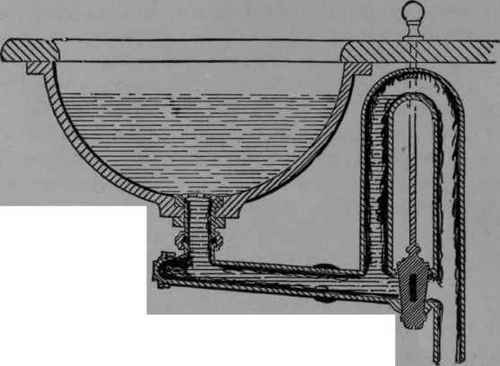
Fig. 3. - Waste-cock Outlet Basin, becoming fouled by the deposit of sediment in the waste water.
The first we have denominated a "waste-cock outlet basin." The whole of the waste-pipe between the basin outlet and the waste-cock, including the upright portion of the overflow passage, is fouled by the contact of the dirty water at each usage of the fixture. The dirty deposit increases with age more or less rapidly according to the use to which the fixture is subjected, until the water-way is reduced to the size of the small stream which trickles through the half-clogged strainer. Each time fresh water is drawn into the basin this dirty passage must be filled first and its water mixed with what follows. The bather who is unfortunate enough to understand what he is doing, may indulge in the reflection that he is literally bathing his hands and face in the refuse of some unknown predecessor. The predecessor may be unscrupulous in his manner of bathing; possibly even diseased, so that the chance of contagion is added to the certainty of pollution. The opening through the waste-cock is very small, generally not over a quarter of an inch in width, so that the water discharges very sluggishly, and all "scouring" of the waste-pipe system is out of the question. Strange to say, this kind of lavatory outlet is one of the most popular in use. It is sometimes called "the Boston waste," although generally the siphon overflow attachment is replaced by a separate overflow pipe connecting with the upper part of the basin. This kind of waste cannot be too strongly condemned. The great extent of its use, in spite of its high cost, shows how little knowledge the public has in these matters, and how important it is that their attention should be called to them.
Another form of lavatory containing an extended fouling surface is constructed on the principle of the plunger water-closet. This device is open to the same objections as the preceding. The fixture is clean and white to all outward appearance, but within it contains a veritable "chamber of horrors," whose superficial area is nearly as great as that of the visible portion. Both the outlet and plunger chambers are inaccessible, so that the constantly increasing filth can never be removed, and yet there is room at the entrance of the handle-rod for the escape of the gases of decomposition generated within and put into circulation by the air entering through the basin outlet when the fixture is empty. Thus we have an apparatus originally intended for purposes of purification, but whose most noticeable office in practice seems to be the contamination of pure water and the manufacture of disgusting smells. These considerations would put a speedy end to the use of the numerous kinds of basins constructed on this plan if the public realized the facts. Unfortunately, the public intelligence seems to travel no further along a plumber's waste-pipe than the eye can follow. The dirt and smells are laid to some other cause, or they are taken as a necessary evil inseparably connected with all plumbing work. No greater mistake than this could be imagined. Plumbing work may be made as safe and sweet as any other part of a house, and it is the object of this work to point out in what manner this may be accomplished.
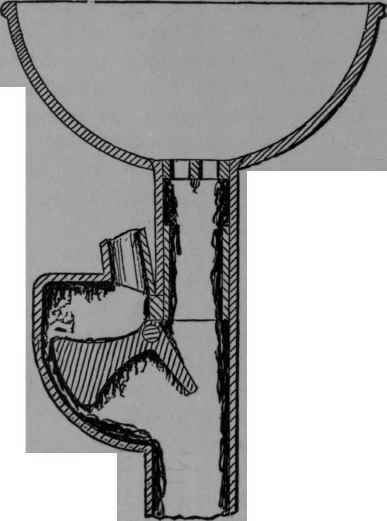
Fig. 4. - Valve Outlet Basin, with Valve Chamber or Container collecting filth.
Fig. 4 may be called a "valve outlet" basin. The valve chamber becomes quickly foul and the valve is certain sooner or later to get out of order through the collection of sediment therein. The dirty water checked in its fall by the valve is reflected and spattered about the chamber, and soon deposits a coating of filth upon it which destroys the working of the valve.
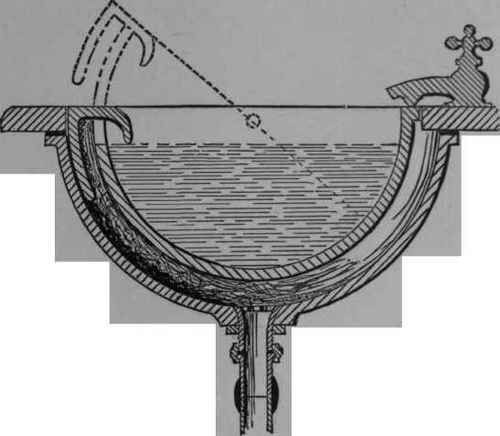
Fig. 5. - Receiver Outlet Basin, with deposit of sediment collecting on the lower basin in usage.
Fig. 5 represents what I think may be appropriately termed a "receiver outlet" basin. It is the ordinary "tip-up" double basin. The lower basin receives the dirty water quickly decanted, after use, from the upper. Thence it flows away through the waste-pipe. Of course a certain amount of soap-suds and other foulness adheres to the whole interior surface of the lower bowl and to part of the under side of the upper one. This is a very dirty contrivance, and here again its popularity is only to be accounted for in the general ignorance on the part of the public of the principles of sanitary construction, and in the fact that, when this style was introduced, no other much better apparatus was known.
Fig. 6 represents another double basin. The upper one is perforated throughout its entire extent, forming an enormous strainer. The waste water has no scouring force in passing: through so many holes, and the cleansing of the cess-pool or strainer is practically impossible without disconnecting the entire apparatus. All these forms of wash-basins are to be rejected as involving a serious defect in the principle of their construction. The same remark, of course, applies to bath-tubs and sinks.
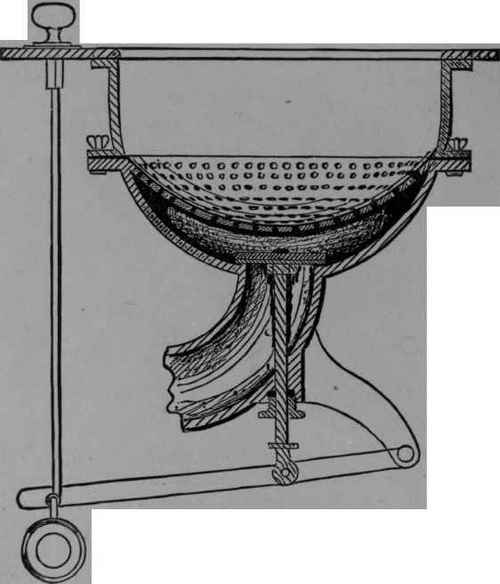
Fig. 6. - Receiver Outlet Basin, having the upper part stationary.
Lavatories of this class are extremely numerous, and their rejection will reduce very materially the number of fixtures from which we shall have to choose and correspondingly simplify our work.
Continue to:


My Books

