


Chapter VIII. Lavatories
Description
This section is from the book "Improved Plumbing Appliances", by J. Pickering Putnam. Also available from Amazon: Improved Plumbing Appliances.
Chapter VIII. Lavatories
EVERY lavatory should be constructed on the principle of a flush tank.
Not alone this, but it should also be so constructed as to ENCOURAGE its actual use as a flush tank; or, in other words, so as to render it more convenient to use it properly as such than improperly as a simple open funnel to guide the water used running from the faucet into the waste-pipe.
We have shown that proper water flushing is the simplest and most effective method of keeping the waste-pipe system clean. Both economy and safety as well as convenience are promoted by such construction.
With the ordinary form of lavatory, an enlargement of the outlet, sufficient to give the requisite rapidity of discharge, would require the outlet plug and fittings to be enormous; so large, in fact, as to be objectionable both in handling and in appearance, and the inconvenience would increase rather than diminish the habit of washing from the faucet rather than from the basin, and thus nullify the purpose of its enlargement. It is necessary that the outlet plug should work without the slightest inconvenience. Otherwise its use will be neglected. It must be almost automatic.
Figs. 42 and 43 represent in section and plan the first step towards the attainment of this end. The outlet is increased to two inches in diameter in the clear, which is large enough to fill an ordinary 1 1/2-inch lavatory waste-pipe full bore, allowing for the obstruction occasioned by the outlet fittings, including the strainer. A waste-pipe smaller than 1 1/2 or 1 1/4 inches in internal diameter is not to be recommended for lavatories, on account of the liability to clog through accidental obstruction. The outlet is placed in a niche in the rear of the basin, and its plug is operated by a simple stem passing through the marble and provided with a handle
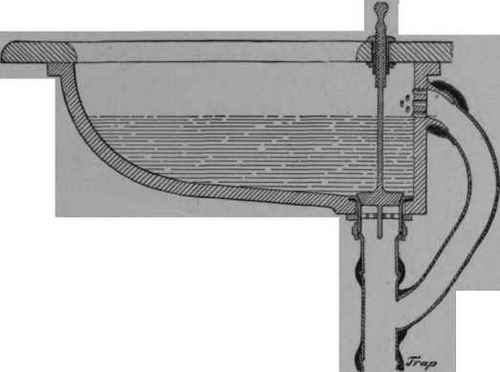
Fig. 42. - First Step. Section of Basin.
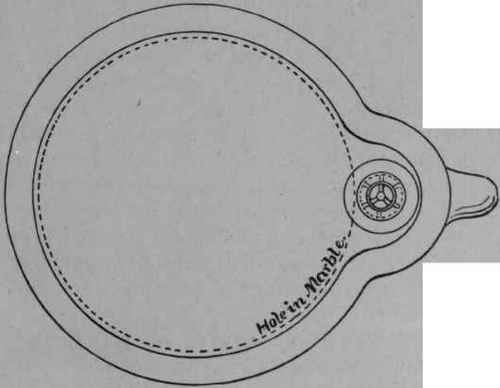
Fig. 43. - Plan.
The plug is held open by shoulders near the top just under the handle, so that it is only necessary to lift the rod and turn it half a revolution to open the outlet and cause it to remain open while the water escapes. To close it again, no careful manipulation of a dirty chain nor balancing of an awkward plug is required. The plug is guided by a stem passing through a hole in the centre of the outlet strainer below, and is held in place by its own weight, increased by that of its stem. The outlet fittings are out of the way of the bather, whose hands encounter the smooth surface of the earthenware instead of the sharp, irregular outlines of the brasswork. The practical result of such an arrangement is that the lavatory is used in its legitimate and intended manner, to the great benefit of the waste-pipe system, the convenience of the user and economy of water. The plug rod is much simpler and easier to clean than the chain.
The apparatus is, however, still defective in many ways. Chief of these is the faulty arrangement of the overflow passage, which violates our rule requiring all parts to be visible and accessible. This passage becomes fouled in the performance of its functions, but cannot be cleaned again without taking the whole fixture to pieces. It also violates our rule of simplicity and economy, since its use involves two unnecessary joints and an unnecessary length of metal pipe. Another serious disadvantage here, as also in the ordinary basin, is that the connection between the overflow and the outlet pipe above the trap necessarily crowd the latter down a greater distance below the fixture than is desirable; and still another serious objection, which holds here as with all other forms of basins having an external overflow-pipe, is that this pipe is liable to be connected with the wrong side of the trap and admit the soil-pipe air freely into the house. Finally, the lifting mechanism is not sufficiently convenient to invite usage.
These defects may be obviated as follows: First, the concealed overflow-pipe and its expensive and dangerous con nections may be done away with by increasing the size of the metallic plug stem and making it and the plug hollow in such a manner as to combine plug and overflow in one. This gives us the ordinary bath-tub stand-pipe overflow with all its advantages, together with an additional one, not known in ordinary stand-pipe bath-tubs of the secluded niche. The overflow-pipe is easily removed for periodical cleansing. The substantial weight of the stand-pipe keeps the plug more firmly on its seat than is possible with the plug alone, and leakage is avoided. Fig. 44 shows the arrangement
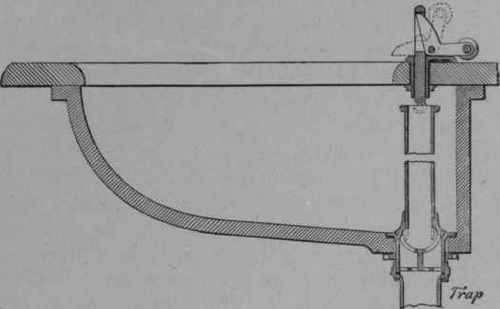
Fig. 44. - Second Step. Section of Basin.
The trap may now be placed close to the fixture, in fact, screwed directly to its outlet fittings, and no possibility exists for a faulty setting by the plumber.
Second, the arrangement for operating the stand-pipe has been improved, so that but a single movement of the hand is required to both raise and lock it. This is accomplished by the partial revolution about its axis of a simple weighted lever or cam above the slab, as shown in Fig. 44. The stand-pipe is hooked to the lifting mechanism in such a manner that it can be easily detached at will, giving free access to the outlet fittings and strainer. Its superficial area is no greater than that of the links of an ordinary basin chain, but its form permits of cleansing while that of the chain does not. The niche is cleansed like the rest of the earthenware surface, without the necessity of removing the stand-pipe, ample space being left around the latter for the purpose.
Thus, our lavatory now possesses all the advantages of a flush tank, without the inconveniences of the ordinary plug and chain fittings, and yet with far greater simplicity and cleanliness.
Continue to:


My Books

