


Chapter XVII. Methods By Which The Composition Of Mixtures Of Constant Boiling Point May Be Determined
Description
This section is from the book "Distillation Principles And Processes", by Sydney Young. Also available from Amazon: Distillation Principles And Processes.
Chapter XVII. Methods By Which The Composition Of Mixtures Of Constant Boiling Point May Be Determined
1. Distillation Method. - In the last chapter it has been shown how the composition of an azeotropic mixture may be ascertained from the weight of distillate that comes over below the middle point, when a mixture of known composition is distilled. This method is generally but not universally applicable.
There are several other methods by which the composition of a mixture of constant boiling point may be determined.
2. By Separation of Pure Mixture. - The most accurate method - applicable, however, only to those mixtures for which the first method can be employed - is to separate the mixture of constant boiling point in a pure state by fractional distillation and to determine its composition either (a) by chemical analysis, (b) by the removal of one component, (c) from its specific gravity, (d) from its refractive power, (e) from its rotatory power or from some other physical property.
(a) If one of the substances is an acid, or a base, the ordinary methods of volumetric analysis may be conveniently employed, or if one component contains a halogen, sulphur, etc., the amount of that element may be determined; but this method is not, as a rule, to be recommended.
(b) When one component is easily soluble in water, and the other insoluble, or nearly so, for example alcohol and benzene, a fairly accurate result may be obtained by shaking the mixture with water in a separating funnel and washing the insoluble component once or twice with water. The volume of this component at a known temperature may then be ascertained or its weight determined, but there is inevitably some loss by evaporation and by adhesion to the sides of the separating funnel and to the solid dehydrating agent, if this is added. As a rule, also, a little of the component that is insoluble in water remains dissolved by the aqueous solution of the other constituent, and to obtain an accurate result it would be necessary to distil this solution, and to treat the first small portion of the distillate with more water in order to separate the remainder of the insoluble component.
This method was employed for the direct determination of the composition of the ternary mixture of ethyl alcohol, benzene, and water
(p. 181), the benzene being determined in the manner described above and the alcohol from the specific gravity of the aqueous solution.1 It was frequently employed by Lecat.
(c and d) As the specific gravities and refractive powers of mixtures are not usually strictly additive properties, it is almost always necessary to determine the values for a prepared mixture of about the same composition as that which boils at a constant temperature or, better, to determine the values for a series of mixtures in order to find what correction must be applied. Such series of determinations of specific gravity have been made by different observers in the case of mixtures of the lower alcohols with water 2 and by Brown 3 for some other pairs of liquids. The specific refractive powers have been determined for several series of mixtures by Lehfeldt,4 by Zawidski,5 and others.
(e) The composition of several binary mixtures was determined by Lecat from their rotatory power.
3. Method of Successive Approximations. - Mixtures of different composition may be distilled, and, by successive approximations, that mixture may finally be made up which distils (a) at a constant temperature, or (6) without change of specific gravity.
(a) This method was employed by Roscoe and Dittmar 6 in the case of mixtures of strong acids with water, and by Ryland 7 to ascertain the approximate composition of the large number of mixtures of constant boiling point examined by him.
(b) If the boiling point of the mixture differs only slightly from that of either of the pure components, observations of the temperature would be useless, but we may find what mixture gives a distillate of the same specific gravity (or refractive power) as itself, or, better, collecting the distillate each time in three or four fractions, we may proceed until the first and last fraction have the same specific gravity. The last method has been employed in the case of ethyl alcohol and water,8 and the following results were obtained with the two last mixtures :Table 72
I Weight of fraction | Sp. gr. at 0°/4°. | II Weight of fraction. | Sp. gr. at 0°/4°. |
23.6 . . | . 0.81936 | 21.2 | 0.81946 |
73.4 . . | . | 550 | . . . |
27.6 . . | . 0.81927 | 260 | 0.81953 |
150 | . . . | ||
261 | 0.81954 |
Young and Fortey, The Properties of Mixtures of the Lower Alcohols with Benzene and with Benzene and Water," Trans. Chem. Soc, 1902, 81, 739.
2 Young and Fortey, " The Properties of Mixtures of the Lower Alcohols with Water," ibid., 1902, 81, 717.
3 F. D. Brown, " Theory of Fractional Distillation," ibid., 1879, 35, 547; "On the Distillation of Mixtures of Carbon Disulphide and Carbon Tetrachloride," ibid., 1881, 39, 304.
4 Lehfeldt, " On the Properties of Liquid Mixtures," Part II, Phil. Mag., 1898 [V] 46, 42.
5 Zawidski, " On the Vapour Pressures of Binary Mixtures of Liquids," Zeitschr. physik. Chem., 1900, 35, 134.
6 Roscoe and Dittmar, Quart. Journ. Chem. Soc., 1860, 12, 128; Roscoe, ibid., 1861, 13, 146 ; 1862, 15, 270 ; Proc. Roy. Soc., 1862, 11, 493.
7 Ryland, " Liquid Mixtures of Constant Boiling Point," Amer. Chem. Journ., 1899, 22, 384. 8 Young and Fortey, loc. cit.
In the first case, the last fraction has a lower specific gravity than the first, showing that alcohol was in excess ; in the second case it is the first fraction which has the lower specific gravity and therefore there was excess of water in the still. It is clear that the specific gravity of the mixture that distils without change of composition must be between those (0.81936 and 0.81946) of the first fractions in these distillations.
Mapping the specific gravities as abscissae against the weights of distillate as ordi-nates in each case, it is found that the lines slope almost equally, the first to the left and the second to the right (I. and II., Fig. 69), and it may therefore be assumed that the required specific gravity is 0.81941, the mean of the other two. If the two lines are produced, they intersect each other at a point between 0.81941 and 0.81942.
According to Mendeleeff's tables, the percentage of alcohol in a mixture which has the specific gravity 0.81941 at 0°/4° is 95.57.
Wade and Merriman 1 adopted the same method, the only modification being the substitution of algebraical for graphical interpolation. From their distillations under normal atmospheric pressure they found that the mixture of minimum boiling point contained 95.59 per cent of alcohol.
In calculating the composition from Mendeleeff's data they used a differential method of interpolation which is probably more accurate than the graphical method employed by Fortey and Young. They find that the specific gravity 0.81941 corresponds to 95.62 per cent of alcohol. In any case the agreement is very satisfactory. The method of successive approximatiors was employed by Lecat in the majority of cases, the results, however, being usually verified by other methods.
4. Graphically from Vapour Pressures or Boiling Points If the vapour pressures at constant temperature, or the boiling points under constant pressure, of a series of mixtures of known composition have been determined, these values may be mapped against the percentages of one of the components, and the percentage corresponding to the maximum or minimum pressure or temperature can then be read off. The pressure- (molecular) composition curve for carbon disulphide and methylal 2 is shown in Fig. 70, but it will be seen that while the maximum pressure can be read with considerable accuracy the corre1 " Influence of Water on the Boiling Point of Ethyl Alcohol at Pressures above and below the Atmospheric Pressure," Trans. Chem. Soc, 1911, 99, 997.
2 The molecular weights of these two substances are equal and the molecular percentages are therefore equal to the percentages by weight.
Sponding percentage of carbon disulphide can only be roughly estimated. The same objection applies to the boiling-point composition curve.
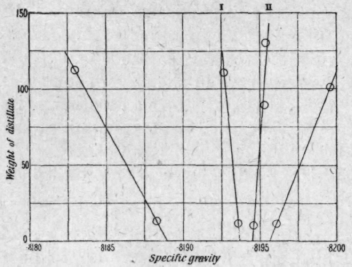
Fig. 69. - Ethyl alcohol an water.
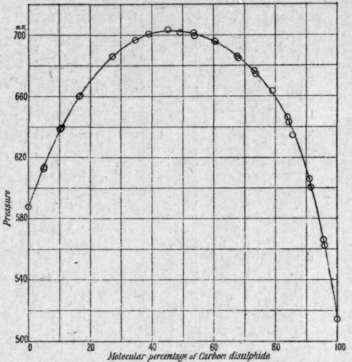
Fig. 70. - Carbon disulphide and methylal.
5. Graphically from Composition of Liquid and Vapour. If the relative composition of vapour and liquid has been determined for a series of mixtures, the composition of the mixture of constant boiling point may be ascertained in various ways.
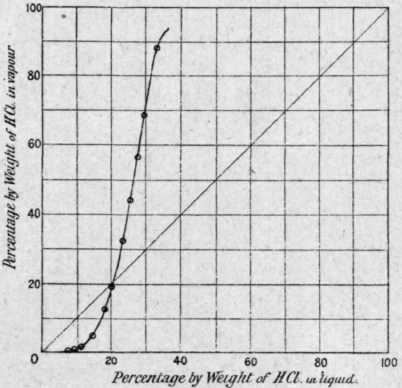
Fig. 71. - Hydrogen chloride and water.
(a) The percentages by weight m or the molecular percentages M of one component in the liquid may be plotted against the percentages m' or m' of the same component in the vapour.1
(b) The ratios R of the weights, or of the number of grammolecules, of the two components A and B in the liquid may be mapped against the corresponding ratios R' in the vapour.
1 Rayleigh, " On the Distillation of Binary Mixtures," Phil. Mag., 1902 [VI], 4, 521.
(c) The logarithms of these ratios may be plotted in the same way.1 Whichever method is adopted, the composition will be given by that point on the curve at which the ordinate and abscissa have the same value or, in other words, by the point of intersection of the curve with the straight line corresponding to equal values of m and m', m and m', R and R', or log R and log R'.
As an example of the first method, Lord Rayleigh's determinations of the composition of liquid and vapour for mixtures of hydrogen chloride and water (Fig. 71) may be mentioned ; 2 Vrevskij 3 employed this method in the case of aqueous solutions of some of the alcohols. For the second and third methods we may take the results obtained by Zawidski for mixtures of carbon disulphide and methylal (Figs. 72 and 73).
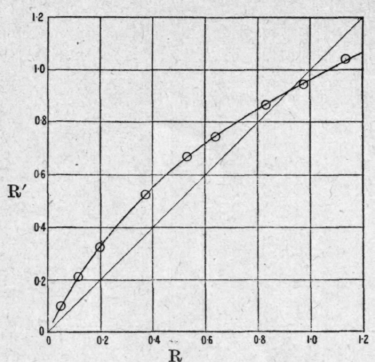
Fig. 72. - Carbon disulphide and methylal.
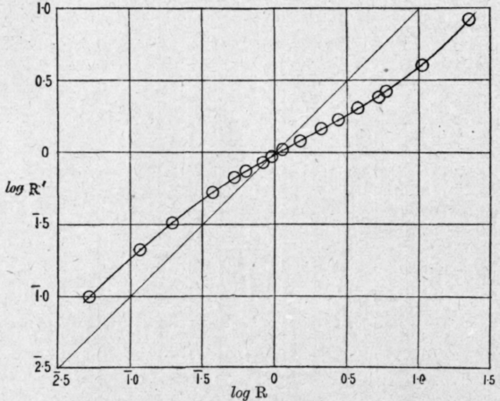
Fig. 73. - Carbon disulphide and methylal.
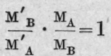
6, Graphically by means of Brown's Formula. - The relative number of molecules (or the relative weights) of the components in the liquid ma and mb and in the vapour m'a and m'b maybe calculated from the experimental observations and the values of plotted against the percentage number of molecules (or percentages by weight) of one component.
1 Lehfeldt, loc. cit. 2 Rayleigh, loc. cit.
3 Vrevskij, Zeitschr. physik. Chem., 1913, 83, 551.

The percentage corresponding to is that required.
Here, again, we may make use of Zawidski's data for carbon di-sulphide and methylal (Fig. 74).
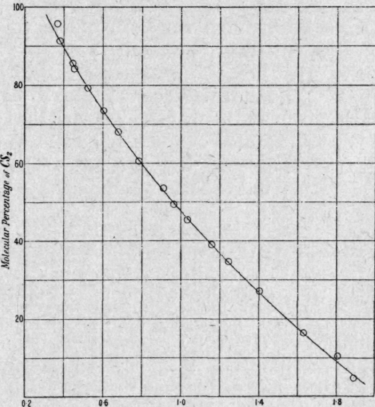

Fig. 74. - Carbon disulphide and methylal.
Continue to:


My Books

