


Appendages To Hooks And Ticks
Description
This section is from the book "The Science And Art Of Phrase-Making", by David Wolfe Brown. Also available from Amazon: The science and art of phrase-making.
Appendages To Hooks And Ticks
241. To a tick with an initial or a final hook there may be appended, according to Mr. Graham, an s circle, a tick, the personal pronoun you, the ing dot; and also the disjoined ticks a and the, written in the place of the ing dot to represent ing a and ing the. Illustrations: all of us,

or all the

who are you

who are having a

but are having

but are having the

Exercise
242. The following phrases may be written by Graham writers in the manner represented:
all are having

and have the

all are having a

and of a

all are having the

and of the

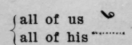
but are having

and are having

but are having a

and are having a

but are having the

and have a

on all his

on having a

or having the

on having the

to have a

or all his

to have the

or all the

two of us

or are you

who are having

or having

who are having the

or having a

who are you

Exercise
243. In the following exercise, ticks are attached to ticks, in accordance with both the Pitman and Graham systems:
all a all the and a and the but a but the he and (he downward)
he who (he upward)

of the* on a on the on to

should a

to the who should who should be
Exercise
244. The following junctions of ticks with ticks are peculiar to the Graham system:
and I

ought I

how he (or how the)

ought there

I should

ought not

of whom

should I

on whom

should there

*Expressed also by "proximity," and sometimes implied by joining, the words between which of the occurs.
Exercise
245. In the following phrases, the a tick, having no regular position, is accommodated to the following tick, which has an assigned position:
and but and how
and who and whoever
Continue to:


My Books

