


A Combination Planing And Shooting Board
Description
This section is from the book "Handy Man's Workshop And Laboratory", by A. Russell Bond. Also available from Amazon: Handy Man's Workshop And Laboratory.
A Combination Planing And Shooting Board
It is sometimes necessary to put a long straight or bevel edge upon a board; and while this can be done by the aid of the try square or bevel square, the board being held in the vise, the accuracy of the work depends largely upon the skill of the mechanic, and requires much practice. For the amateur, and even the professional, a hoard such as illustrated in Fig. 17 is desirable.
All that is necessary for planing square edges only is a board about 9 inches wide, secured to one underneath, 15 inches in width, each 7/8 of an inch thick, and as long as the bench. The boards must be planed perfectly true, the working edge in particular, and a stop of some kind should be furnished at one end.
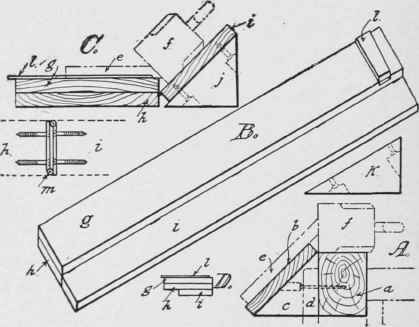
Fig. 17 - Combination planing and shooting board.
Sometimes it is necessary to plane a long miter edge on a board, in which case an ordinary shooting board, such as described, will not do.
One arrangement of shooting board for long miter joints is shown in the cross-sectional view A, in which a is a length of 1, by 4-inch timber, to which is secured a board b. at an angle of 45 degrees, by means of triangular blocks c, spaced about 2 feet apart, commencing near the ends. One end of the shooting board is held in the vise d, the other end resting upon pegs in the apron of the bench. The board c, whose edge is to be planed, is clamped to the board b, and the plane f shot along the 3 by 4-inch piece a.
At B is shown another scheme, where two 9-inch boards, g and h, are secured together by means of screws, driven in from the underside of the lower board h, which in turn is hinged to a board i, in the same plane, 6 inches wide. By means of blocks, j or k, secured to the board i, bevel or miter edges of 45, 60, and 30 degrees can be planed along the edge of any board c, as detailed at C. A wedge stop l, of hard wood, is furnished at the far end of the plank g, several being made of various thicknesses, to suit the work in hand.
Before using the board, the workbench should be swept down, and it is very necessary to have it level.
Ordinary hinges for holding together the boards h and i, are perhaps best, being steadier; but for convenience when the board is out of use, if the double swing hinges m are used, the 6-inch board i can be folded under the others, as shown at D, the blocks of course having first been removed.
Care must be taken to place the hinges a trifle below the surface, or the edge of the plane will wear over them, as it is shot from one end of the board to the other.
Continue to:


My Books

