


I" And "He" Distinguished
Description
This section is from the book "The Science And Art Of Phrase-Making", by David Wolfe Brown. Also available from Amazon: The science and art of phrase-making.
I" And "He" Distinguished
220. It is absolutely necessary that I and he be in every case carefully distinguished. If the writer will make it an invariable rule that initial I shall be written in the first position, and initial he in the second, all possibility of confusion or mistake at the beginning of phrases in reference to these two words vanishes. Nor is there any danger of confounding he and I in the midst of phrases, when I is written with the first half of the ordinary I sign, that is in the direction of p, as he is never written in this direction, except in the limited and guarded way stated in
Paragraph 188. Illustrations: when I am
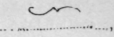
where I must

221. One means of distinction is the adoption of an inflexible rule that the he tick may be freely joined to a preceding word, but the I tick, if made in the direction of he, must never be so joined. This method of distinction is strongly recommended. Another method is afforded by Mr. Graham's rule that the I tick when attached to a preceding word be always made either perpendicular or horizontal, never oblique. Illustrations: if I may

when I do

wherever I am
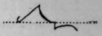
shall I think

(See Graham's Hand-book, Section 103, R. a.) Those who have adopted this method of expressing medial or final I, say that in practice there is no danger of conflict. In the language of Mr. Graham, "As he is written by the same sign as joined the, so I when joined to a preceding word may be written by the same sign as joined a-an." (Graham's Dictionary, p. 212.)
Exercise
222. In the following phrases, I is to be expressed by a horizontal or perpendicular tick; he, by an oblique tick:
shall he take shall I take so he does so he thinks so I do so I think
what was he doing what was I doing wherever I may whenever he may whenever he must whenever I must
Initial Displacement
223. Occasionally, under the principle of initial displacement, already explained, the tick signs, of, or, on, all and I, at the beginning of a phrase, may be written a little higher or lower than ordinarily, for the purpose of bringing the second word of the phrase into its normal and distinctive position, as in the phrases all these

all those

on each

on much

on our

I had

The displacement of the first word of the phrase shows that the second word not only is, but is intended to be, in its normal position. In the absence of initial displacement, it might happen to be there as a mere consequence of the order in which the words of the phrase succeed one another.
Exercise
224. In the following phrases, the initial tick is in every case to be so placed that the second word of the phrase may occupy its normal position:
all other all other accounts (or kinds) *all our all ours all ourselves all over all over the world all these all those I doubt I had
I had occasion I had rather I had some I had (the) honor I hope
I hope that I hope (to) make I hope you may I hope you will I hope your I offer I often **I saw (vocalize saw) I saw him I saw a
I saw as many as I saw many I saw some persons I saw the I saw you
I saw you could not be I saw you might not have
*Many Graham writers would write all our by prefixing to all the r hook.
**For method of writing I before s or z, see Paragraphs 214-216.
I see
I see a
I see many things
I see the
I see you are
I see you are determined
I speak
I thank
I took
I value
of these
of those
on each
on much
on these
on those who
I wish
I wish to
I wish (to) ask
I wish (to) be
I wish (to) say
I wish to tell
225. In a few phrases, such as I had not and to whom, the normal position of the tick is not simply modified, but absolutely sacrificed; that is to say, the first word of the phrase is taken entirely away from its normal position- without, however, any loss of legibility.
the "how" tick.*
226. Graham writers represent the word how by a tick just under the line which, when standing alone, is written upward in the direction of ray, but in phrases may be written either upward or downward; that is to say, in the direction of either ray or chay, according to convenience of junction. The how tick is always initial, except in the phrase and how. Illustrations: how many

how does he

*The methods of abbreviation exhibited in the paragraphs immediately following (226 to 243) are presented here in order that the full resources of Mr. Graham's system may be understood. Some of them involve delicate distinctions, which should not be attempted by any writer who has not the necessary accuracy of hand. As to many of these expedients, those who use them do not claim that they are necessary except for the development of the very highest speed, which, of course, involves laborious and long-continued practice. The amanuensis may well afford to dispense with them. Let it never be forgotten that, if used at all, they must be thoroughly familiarized. (Continued next page.)
Exercise
227. In the following phrases, the how tick is mad( downward:
and how
how a
how are (are upward)
how are these things
how are we
how can it
how ca(n) you
how could they
how could you
how goes it how is how is it how is this how many how may how must how mus(t) it how surely
228. In the following phrases, how, except where otherwise specified, is made upward:
how do they how does he how does it how he how he is how he is now how is (how made upward or downward) how long how far how fast how much
229. In order that how may make a convenient junction when followed by upward l, Mr. Graham sanctions the representation of how in such cases by a, tick in the third position similar to the tick which in the second position represents to; as, how will

In this connection the student is advised to read and ponder the "caution" embraced in Paragraph 60. As has been well remarked by Mr. Clarence E. Walker, an accomplished Graham writer, in his recently-issued book on "Speed and Legibility," each stenographer must find out what abbreviating expedients he can handle, and adapt his shorthand to them.
Exercise
230. In the following phrases, write how with a downward tick, below the line, in the direction of p:
how will
how will it be
how will they
how will this how will we how will you
Continue to:


My Books

