


Coalescing Or Merging Of Circles
Description
This section is from the book "The Science And Art Of Phrase-Making", by David Wolfe Brown. Also available from Amazon: The science and art of phrase-making.
Coalescing Or Merging Of Circles
255. When a word consisting of or ending with a circle is joined to a following word consisting of or beginning with a circle, the two circles merge or coalesce, making a double-sized circle.
Illustrations:
1. Two circle word-signs merged: is his or is as

as is, as his or as has

2. A circle word-sign, followed by a word beginning with a circle, the two circles being merged: as soon as
*The a tick is perpendicular, in order that the phrase may not be mistaken for as not or has not.
**The a tick is perpendicular, in order that the phrase may not be mistaken for is not.

is said

is seen

as such

is such

it is simply

it is sufficient

it is such

3. A word ending with a circle, joined to a word beginning with a circle, the two circles merged: this subject

in this city

4. A word ending with a circle, followed by a circle word-sign, the two circles merged: this is (or this has)

loves us

takes his time

256. St loop at the end of a word is often changed to a circle, in order that this circle may merge with one immediately following. Illustrations: jus(t) as (w)ell

as fas(t) as

257. The double circle standing alone or at the beginning of a phrase, is written either above or on the line, in accordance with the position of the first of the two words which the double circle represents.
258. The double circle, when unconnected with other strokes, is made in the contrary direction to the motion of the hands of a clock, and is best begun as if starting to make the short-hand letter m backward. Joined to other characters, it is written in one direction or the other, according to convenience. Illustrations: as has been

as some

259. The double circle may be followed by an a or the tick. Illustrations: is as the.
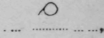
is as a

as is the

as is a
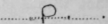
The junction of the tick with the double circle is difficult for an untrained hand, and should be specially practised by the learner.
260. In some cases it is convenient, in other cases highly inconvenient, to form a double circle at the beginning of a phrase. But there can be no objection to a double circle so comparatively easy as that at the beginning of phrases like as soon as, is seen, etc. The student, following what should be a general rule-always to avoid, if possible, non-facile forms-will, wherever it seems more convenient, write separately the circle word-sign, instead of connecting it with the following word by means of an initial double circle.
Continue to:


My Books

