


Special Problems. Carving Meat
Description
This section is from the book "Food - What It Is And Does", by Edith Greer. Also available from Amazon: Food: What it is and Does.
Special Problems. Carving Meat
In Carving, the grain of the meat, that is, the way the fibers run, is the primary fact to be regarded. Short fibers are more tender than long ones, because short they are more fully exposed to the digestive juices. Cutting fibers across and masticating thoroughly increase digestibility of meat.
Location of bones also requires attention, that the bones may be avoided and the meat loosened from them in carving. Hence the necessity of a general but clear idea of the relation of the cuts of meat to the skeleton and the muscles.
In all animals the bones and muscles are in similar positions and similar in character. The general large cuts of the animal for the market differ as in the diagrams on pp. 82, 88, 90. The special cuts of these into the small cuts for the household are similar. The steaks of beef become chops or cutlets, thus :

Rib.
French.

Loin.

Round bone.

Blade.
Steaks from beef are the cuts relatively free from bones and of such texture as to be palatable when cut comparatively thin (1" - 1 1/2") and cooked quickly, as in broiling or roasting. (See p. 92).
Roasts are larger quantities of the same cuts or ribs in beef; in mutton and pork they are legs and shoulders. (See p. 93).
Turn the next page into a roll and look at cuts on pp. 92-93, with cuts on pp. 90-91. Where in the animal do you find these?
See steaks, chops, cutlets, roasts of different kinds at home and in shops.
Look in steaks for bones and modifications of these, also amount of fat. Draw the steaks. Name each. Then compare with book. Reread pp. 85-86, and inspect meat and muscles of animals (diagram, p. 90), then decide carving and indicate with lines on your drawings.

Animal Diagrams. Skeleton - Muscles - Cuts
Beef. Skeleton
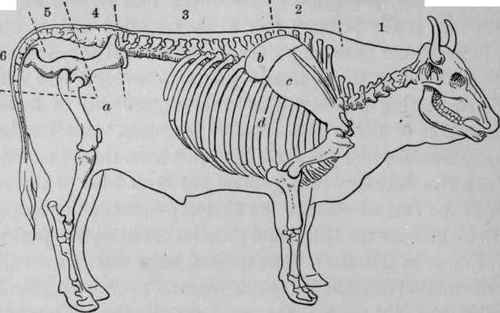
1 - neck.
2 - chuck ribs (6).
3 - prime ribs (7) and loin.
4 - thick or hip sirloin.
5a - top of rump.
6a - aitchbone or rump piece b - cartilage c - shoulder blade d - cross ribs.
Beef. Muscles
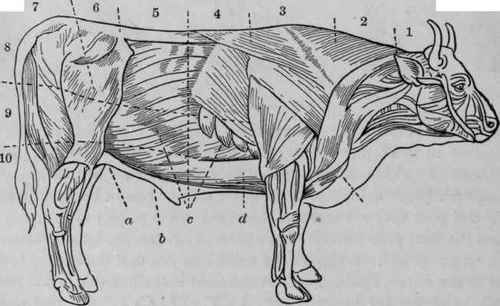
1 - head 2 - neck.
3 - chuck ribs and shoulder blade.
4 - prime ribs (7).
5 - loin.
6 - thick sirloin.
7-8 - rump piece (in New York).
8 - aitchbone.
9 - round 10 - leg a - top of sirloin b - flank c - plate d - brisket.
(Redrawn from Maria Parloa's "Home Economics," by permission of The Century Co).
Market Cuts Animal Diagrams
Beef. Cuts

Side Of Beef
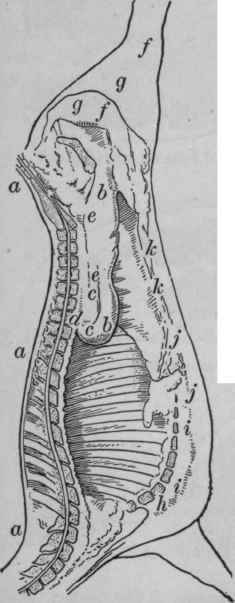
"a - spine b - suet c - kidney d - tenderloin (thin) e - tenderloin (thick) f - round (top or inside) g - round (best part) h - sternum i - brisket (thick end) j - brisket (thin end) k - flank".
New York Cuts

CUTS OF MEAT STEAKS.
Steak - Cuts

Method of cutting sirloin steaks.
a - 3 round-bone - poorest b - 3 flat-bone - better c - 3 hip-bone - best (largest tenderloin).
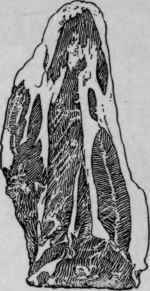
Chuck steak.
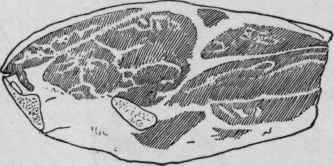
Round-bone steak.

Top and bottom round steak.
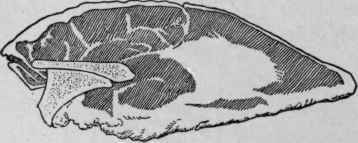
Flat-bone steak.

Porterhouse steak.
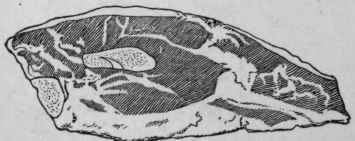
Hip-bone steak.
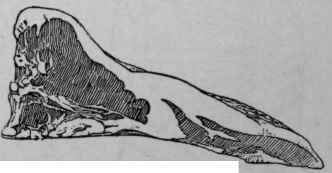
Delmonico steak.
(Adapted from Maria Parloa's " Home Economics," by permission of The Century Co).
Roasts. Cuts Of Meat
Bones - Muscles

Shows changed position of thigh-bone when the hind quarter of the animal is hung; i, the point where loin is separated from hip sirloin.
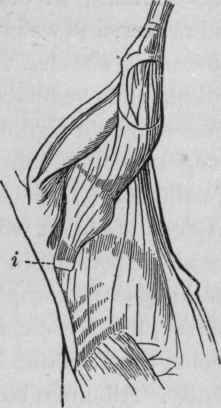
Shows changed position of muscles when hind quarter is hung; i is the point where the loin is separated from the hip sirloin.
Carving Roasts

Round of beef (Lines on roasts indicate carving).

Roast ribs of beef.

Sirloin or porterhouse roast.
Continue to:


My Books

