


The Epidermis And Periderm. Part 4
Description
This section is from the "Histology of Medicinal Plants" book, by William Mansfield. Also see Amazon: Histology of Medicinal Plants.
The Epidermis And Periderm. Part 4
Occasionally multicellular hairs assume the form of a shield (Plate 12, Fig. 1); in such cases the hair is termed peltate, as in the non-glandular multicellular hair of shepherdia canadensis.
Hairs grow out from the surface of the epidermis in a perpendicular, a parallel, or in an oblique direction. Hairs which grow parallel or oblique to the surface are usually curved, and the outer curved part of the wall is usually thicker than the inner curved wall.
The mature hairs of some plants consist of dead cells. In other plants the cells forming the hair are living. When dried, those hairs, which were dead before drying, contain air; while those hairs which were living before drying, show great variation in color and in the nature of the cell contents. The contents are either organic or inorganic. The commonest organic constituent is dried protoplasm. In cannabis indica are deposits of calcium carbonate.
Multicellular multiseriate branched hairs are the ultimate division of the pappus of erigeron, aromatic goldenrod, arnica, grindelia, boneset, and life-everlasting.
The hairs of erigeron (Plate 13, Figs.. 1 and 2) are slender; the walls are porous. Each hair terminates in two cells, which are greatly extended and sharp-pointed; the branches from the basal part of the hairs (Plate 13, Fig. 1) are of about the same length as the apical branches.
The hairs of aromatic goldenrod (Plate 13, Figs. 3 and 4) are larger than those of erigeron; the diameter is greater and the walls are non-porous. The apex of the hair terminates in a group of about four cells of unequal length, which are sharp-pointed. The branches of the basal cells (Plate 13, Fig. 3) are similar to the branches of the apical cells.
The hairs of arnica (Plate 14, Figs. 1 and 2) have thick, strongly porous wails; the branches terminate in sharp points. The apex of the hair terminates in a single cell. The basal branches (Plate 14, Fig. 2) are much longer than special branches.
![Non Glandular Multicellular Hairs Shepherdia canadensis, [L.] Nutt.](images/Non-Glandular-Multicellular-Hairs-Shepherdia-canadensis-L.jpg)
Plate 12. Non-Glandular Multicellular Hairs Shepherdia canadensis, [L.] Nutt.
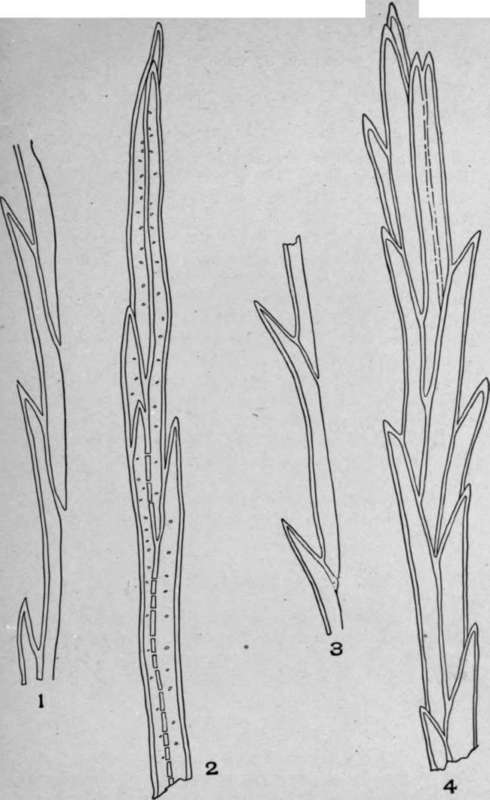
Plate 13. Multicellular Multiseriate Branched Hairs.
1. Basal hairs of erigeron (Erigeron canadensis, L.).
2. Apical hairs of erigeron (Erigeron canadensis, L.).
3. Basal hairs of aromatic goldenrod (Solidago odora, Ait.).
4. Apical hairs of aromatic goldenrod (Solidago odora, Ait.).
The hair of grindelia (Plate 14, Figs. 3 and 4) has very thick walls with numerous elongated pores. The apex of the hair terminates in a cluster of cells with short, free, sharp-pointed ends. The basal branches (Plate 14, Fig. 4) are longer than the apical branches.
Boneset hair (Plate 15, Figs. 1 and 2) has non-porous walls. The apex of the hair terminates in two blunt-pointed cells. The terminal wall is thicker than the side wall. Some of the branches lower down terminate in cells with very thick or solid points. The basal branches (Plate 15, Fig. 1) are longer, but the cells are narrower and more strongly tapering than are the branches of the apical part of the hair.
Life-everlasting (Plate 15, Figs. 3 and 4) has uniformly thickened but non-porous walls. The hair terminates in two blunt-pointed, greatly elongated cells.
The basal branches (Plate 15, Fig. 4) are narrower, slightly tapering, and the base of the branches frequently curve downward.
The cell cavities of these hairs are filled with air.
The walls of hairs are composed of cutin, of lignin, and of cellulose.
Continue to:


My Books

