


Dressed Fish And Fish Entrees. Part 29
Description
This section is from the book "Larger Cookery Book Of Extra Recipes", by Mrs A. B. Marshall. Also available from Amazon: Mrs A.B. Marshall's Larger cookery book of extra recipes.
Dressed Fish And Fish Entrees. Part 29
Sauce For Fillets Of Turbot A La Chartres
Put the bones from the fish into a stewpan with two sliced onions, one or two strips of celery, three anchovies, a bunch of herbs, such as thyme, parsley, bayleaf, one dozen peppercorns, three sliced tomatoes, half a pint of white wine, the juice of one lemon, a pint and a half of water, and a little salt; let the whole boil for half an hour, then remove the bones, and to the other ingredients add an ounce and a half of arrowroot that has been fried with two ounces of butter without browning; add a dust of Marshall's Coralline Pepper; stir till it boils, then rub through a tammy, reboil and use.
Fillets Of Whiting A L'ambassade Filets De Merlan A L'ambassade
Remove the fillets from two or three fresh whiting, and take off the skin; bat out the fillets with a cold wet knife, and if they are large cut each into two or three pieces; trim these neatly, place them in a well-buttered saute pan; sprinkle over them a little salt and lemon juice, and put into the pan about two table spoonfuls of cold water; place a buttered paper over the fillets, and put them into a moderate oven to cook for ten to twelve minutes, then take them up and arrange them on a hot flat dish and pour Ambassade sauce completely over the fillets; sprinkle over this some grated Parmesan cheese, and brown it with the salamander; garnish round the dish, as in engraving, with croutons of bread that have been cut out with any fancy cutter and fried in clean fat till a pretty golden colour, then brushed over with a little warm glaze and dipped into grated Parmesan. Serve for a dressed fish for dinner or luncheon.
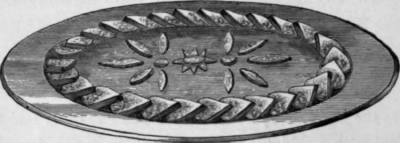
Cream Of Whiting With White Wine Crime De Merlan Au Vin Blanc
Pound ten ounces of scraped raw whiting in the mortar till smooth, then pound eight ounces of Panard (vol. i.); mix the fish and panard together, and add a pinch of coralline pepper and three whole eggs; work into a smooth paste, then mix in three large tablespoonfuls of cream, and pass all through a fine wire sieve; prepare a timbal mould by buttering the inside well and ornamenting it all round the mould with strips of finely chopped truffle and lobster coral alternately, then put the prepared mixture into a bag with a plain pipe, and fill up the mould with it; knock the mould on the table to make the farce fall well into it; then place it in a stewpan on a fold of kitchen paper with sufficient boiling water to cover three-fourths the depth of the mould, watch the water reboil, place the cover on the pan, draw it to the side of the stove and let the timbal steam for half an hour; when cooked take up and turn out on to a hot entree dish or a flat dish, and pour White Wine sauce round. Serve as a dressed fish or as an entree. The quantities given above are sufficient for eight to ten persons.
Continue to:


My Books

