


4. The Triumph Of Woman
Description
This section is from "Every Woman's Encyclopaedia". Also available from Amazon: Every Woman's Encyclopaedia.
4. The Triumph Of Woman
A Mischievous Mistranslation - Why Women Succeed on Local Government Boards - The Ministering Angel of Pauperdom - A Woman Political Economist - Women on the School Board County Councils - Sewn Up for the Winter - A Woman Mayor
Archdeacon Wilberforce has shown with great perspicacity what an amount of mischief has been done by the misinterpretation and mistranslation of the story of woman's creation. The word "rib" should have been rendered "side," or "half." Woman was not taken out of man, an inferior vessel, but was the other created half of the human race with distinct functions. On this mistaken translation of a word a whole structure of fallacious theories and deductions, gaining strength through the ages, has been raised. But, as the archdeacon pointed out, "a new era has dawned and woman was beginning to take her proper place in the world; and when this was achieved it would be of the utmost value to mankind."
The advance made by women in the work of public service as members and elec-tors of local governing bodies and as paid public officials is a notable example of the "rib," or "other side," taking her place in the general work for the well-being of the community.
The administrative work of local government may be likened to housekeeping on a large scale. The woman county, town, or parish councillor attends to the cleansing of streets, efficient drainage, purity of food, etc., things which in a limited degree engage the attention of every intelligent housewife, although in the latter capacity the "street" is the back yard, or the kitchen area, or carriage-drive of her house. The woman member of the old school boards and now of the education committees, exercises over the children of her locality a supervision akin to that used by mothers, elder sisters, not to say maiden aunts, over the education and training of the children at home.
The woman Poor Law guardian extends the beneficent care for her poorer neighbours - which kind-hearted women have exercised throughout the ages, from the abbesses of conventual houses to the modern chatelaine - to the inmates of workhouses and infirmaries, the recipients of outdoor relief, and the boarded-out children of the State.
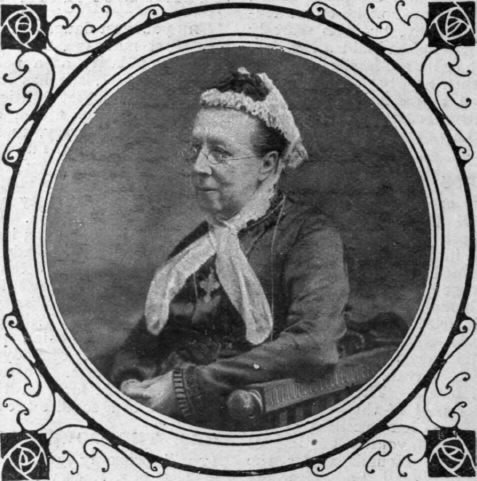
Miss Louisa Twining, the noble hearted pioneer of work among the paupers of our workhouses and infirmaries Photo, Elliott & Fry
Although women were elected to school boards before they became eligible as Poor Law guardians, it is the care of the poor which has most strongly appealed to women in public administrative work, and there are now upwards of 1,000 women serving upon boards of guardians in England and Wales.
The agitation for workhouse reform, which led up to this result, began in the early fifties, and it is difficult to realise now the storm of opposition raised when it was suggested that ladies might be allowed to visit in a private capacity the sick and infirm and the little children in the London workhouses. Many guardians were greatly shocked; it was so un -womanly to take an interest in paupers! Bumbledom shrieked with horror, and possibly with fear also, at the suggestion, and the Local Government authority put on its blue spectacles and tightened its red-tape.
Though Elizabeth Fry had but recently passed to her rest, followed by the tears and blessings of the prisoners in Newgate and the plaudits of the philanthropic world for cleansing the prisons of some of their worst evils, it was regarded as almost criminal to attempt to bring sunshine into the workhouse. Yet how sorely it was needed. There was little or no classification of inmates, and the respectable, aged poor, the sick, the infirm, the unfortunate young girls and the innocent little children, so unfairly branded with the pauper stamp, were left to the cold mercy of the "Mrs. Corneys" and the "Mr. Bumbles," as much as the most hardened vagrant of the casual ward, with whom indeed they had to associate.
The guardians were usually humane men, but they found themselves rather helpless
World Of Women before the workhouse matron, especially if she wore a snowy apron, and curtsied very low, and smilingly assured them that the "dear children were doing well," and the inmates of the sick wards - there were no infirmaries with nursing staffs in those days - were "as comfortable as could be." Inspection of the domestic economies and arrangements of the workhouses by male guardians only could scarcely be other than a farce. A guardian at the great workhouse of Liverpool, when he made a feint of inspecting the paupers' bedding, wore lavender kid gloves!
As a contrast to this procedure may be cited the action of one of the first women guardians. When she made a tour of inspection in her workhouse she noticed that many of the children walked lame. The matron assured her that it was "only chilblains," and she was "doctoring them." The lady guardian, however, told one of the boys to take off his boots, that she might see what was the matter. As he did so, he revealed bare feet covered with sores caused from rubbing against the hard lining of the boots. The mystery was solved. In order to save herself the trouble of darning, the matron had been in the habit of cutting off the feet of the children's stockings, leaving them to wear the legs only.
The cry of the neglected pauper at the beginning of the' fifties came with far-reaching effect to Miss Louisa Twining, a young lady of leisure, who was stirred with the spirit then beginning to awaken women to a larger and fuller interest in the public service.
Are there no beggars at your gate.
Nor any poor about your lands?
the poet asked of Lady Clara Vere de Vere, and in that spirit Louisa Twining went to the succour of the inmates of the Strand Workhouse, a huge caravanserai of depraved, suffering, and neglected destitute poor practically at the gate of her father's house. Miss Twining lived in the good old style of our big merchant families in a house close on the river's strand. To-day she can recall the sound of the red-coated postman's bell as he waited at the corner of the street for the citizens to bring out their letters. She remembers, also, the excitement of seeing her brothers off by the stage coach at St. Martin's-le-grand when they returned to Rugby after the Christmas holidays. She walked, too, in maiden meditation 'midst the leafy shades of the then secluded Temple Gardens down by the river.
Continue to:


My Books

