


Lamp For Photographic Dark Room
Description
This section is from the book "Cassell's Cyclopaedia Of Mechanics", by Paul N. Hasluck. Also available from Amazon: Cassell's Cyclopaedia Of Mechanics.
Lamp For Photographic Dark Room
To make the lamp here illustrated, cut two rectangular pieces of cardboard 8in. by 4 in. and four pieces Sin. by 1 3/4 in. In one of the wider pieces cut out a piece for the window about 5in. by 2 1/2in., and fit in a piece of ruby glass, secured by lantern slide binding strips stuck on both sides. If ruby glass is not available, gum two thicknesses of orange paper over the space. Then lay this piece on the table (inside uppermost), with one of the narrow cards on each side of it, and join the three together with a binding strip over each joint, making the ends square. While this is drying join the three remaining cards in the same way, the wide one being in the centre. Then turn both parts over, adjust evenly, and join again, when the whole will appear as in Fig. l, where the blacker line at D shows the binding strips in view, the joints B,C, E, F, having been joined on the other side. Next join the ends A, which is done by holding them over a flat ruler while sticking on the strip. These strips act as light-tight hinges, so that the whole will fold up flat, as shown in section partly closed in Fig. 2. The letters at the joints in Figs. 1 and 2 correspond, and make this quite clear. For the bottom, cut a piece of tin 4 1/2 in. by 4 in. and turn the edges up Jin. full all round, snipping out the corners. This will make a tray that will fit loosely inside. To make the top, cut a piece of tin to the shape shown in Fig. 3, bend at the broken lines and cut at the full lines, so that it appears as shown by Fig. 4. The edges projecting downward will be 3 3/4 in. apart, to fit inside the lamp (see section, Fig. 4). The flanges bent up form light shades in one direction for the ventilation hole. A second piece of tin will shade in the other direction, and this must be cut as shown in Fig. 5, and bent along the dotted lines, and slightly curved as at S.
This will slide over the first tin, and the flanges of the lid will meet at the corners, and, being 3 3/4 in. by 31/4 in., will fit comfortably in the top. The tray bottom and lid cover keep the card sides extended as shown in Fig. G. When packed up, the tray and cover will fit into each other, and the sides fold up flat.
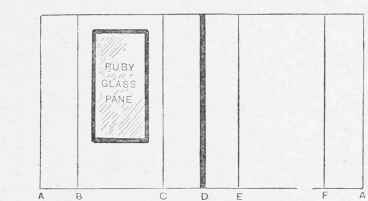
Fig. 1.
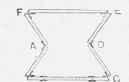
Fig. 2.
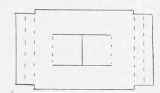
Fig. 3.
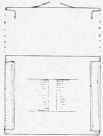
Fig. 4.
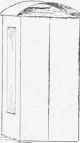
Fig. 6.
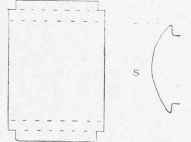
Fig. 5. Lamp for Photographic Dark Room.
Continue to:


My Books

