


Chapter XXIV. Beekeeping Memorials
Description
This section is from the book "History Of American Beekeeping", by Frank Chapman Pellett. Also available from Amazon: History Of American Beekeeping.
Chapter XXIV. Beekeeping Memorials
The sudden death of Rev. L. L. Langstroth on Sunday, October 6, 1895, terminated a very interesting career. With the single exception of Huber, the blind naturalist, Langstroth probably contributed more to the beekeeping industry than any other individual. His invention of the bee space and the top opening hive, discussed fully elsewhere, were so fundamental as to provide the very foundation on which the business of honey production was to be built.
In the American Bee Journal for February, 1896, appeared a brief statement in the editorial column that a number of readers had suggested that a fund be raised to erect a monument to the memory of Langstroth. George W. York was then editor of the magazine and he started the fund with a list of four subscribers: himself, Dr. C. C. Miller, Miss Godfrey, a compositor in the Bee Journal office, and George W. Brodbeck. Thus announcement of the proposed monument appeared at the same time as an article in Gleanings, written by J. S. Hartzell, in which he proposed that money be raised for a suitable monument to be paid for by popular subscription.
In the March 15 issue of Gleanings, the editor complains that funds are coming in very slowly, and this editorial was reprinted in the American Bee Journal for March 26. Times were exceedingly hard, and beekeepers, generous as they are, were in many cases unable to make any unnecessary outlay at the time. That the matter was not permitted to drop when so little immediate interest was manifested indicates the warm feeling of regard that was felt for the deceased man.
In August of the following year, A. I. Root again comments in Gleanings to the effect that only $50 had been contributed to the fund. He expressed the opinion that most beemen would esteem it a privilege to help with such a cause if only the matter were properly started, and offered to add $10 himself. He suggested that Dr. Miller and Eugene Secor, then manager of the National, provide a suitable inscription for the proposed tombstone. This suggestion indicates the weakness of the movement up to that time in that there had been no personal responsibility for raising the fund.
E. S. Lovesy, president of the Utah Beekeepers' Association, appears to have supplied the push needed to start things moving. In a letter to the American Bee Journal, he proposed that a committee of five be appointed by the officers of the national organization to agitate the matter until funds were raised and the monument placed. Editor York approved, and proposed that Eugene Secor be chairman of the committee, to be assisted by Thomas G. Newman, Dr. C. C. Miller, G. M. Doolittle, and Mrs. L. Harrison. Doolittle at once resigned in favor of P. H. Elwood. Elwood wrote to Gleanings that, in his opinion, a $100 monument should be sufficient. Root commented to the effect that not even $100 had as yet been raised as a result of all the agitation, and that much of this came from foreign countries.
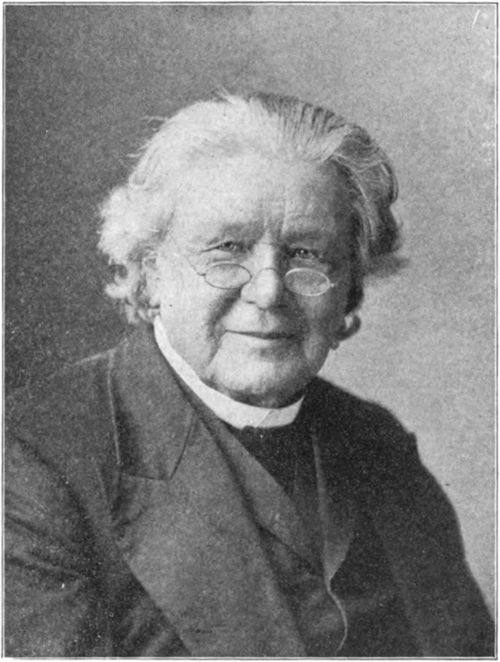
Rev. L. L. Langstroth, America's greatest beekeeper.
Once recognized as chairman of the monument committee, Eugene Secor set about to finish the job. He appealed to the beekeepers through the bee papers for a large number of small contributions and soon announced that $275 was in sight for the purpose. He proposed the following inscription as having been agreed upon by the committee as appropriate:
Inscribed to the memory of the Rev. Lorenzo Lorain Langstroth "Father of American Beekeeping"
By his affectionate beneficiaries in the art who in remembrance of the services rendered by his persistent and painstaking observation and experiments with the Honey-bee, his improvements in the hive, and the charming literary ability shown in the first scientific and popular book on the subject of beekeeping in the United States gratefully erect this monument.
Rest thou in peace. Thy work is done.
Thou hast wrought well. Thy fame is sure.
The crown of love which thou hast won For useful deeds shall long endure.
Apparently Secor is entitled to much credit in connection with the final consummation of the project. He was accustomed to getting things done, and, when the matter was left in his hands, he gave it the vigorous attention needed. At the suggestion of E. R. Root the inscription was prepared by Secor and was accepted without change. It was not until June of 1900 that the stone was finally in place, built at a cost of $300. It stands in the cemetery at Dayton, Ohio, as evidence of appreciation of Langstroth on the part of his fellows. It was the first effort to recognize the services of a beekeeper in America and, considering the stringent economic conditions of the time, brought a favorable outcome. It was never seriously proposed to raise a large sum.
One after another of the leaders of the craft followed Langstroth to the grave with no suggestion of similar honor until Dr. C. C. Miller died on September 4, 1920. Miller had been a well-known figure among American beekeepers for half a century. He had conducted the questions and answers department in the American Bee Journal, and a column called "Stray Straws, " in Gleanings, for many years. He was, accordingly, one of the best-known and most popular writers of his time.
His books were widely read and, at the time, were in active demand. Bom in 1831, he was in his ninetieth year at the time of his death. In early life he had been a teacher and later, for a time, practiced medicine, but the responsibility of the profession hung heavy upon him and he gave up the practice to engage in something less exacting. Country life was very attractive to him and he purchased a small farm near Marengo, Illinois, where he remained to the end of his life.
Continue to:


My Books

