


Chapter VIII. Importation Of New Races Of Bees
Description
This section is from the book "History Of American Beekeeping", by Frank Chapman Pellett. Also available from Amazon: History Of American Beekeeping.
Chapter VIII. Importation Of New Races Of Bees
All trace of the introduction of honeybees to this country by the early settlers has been lost, but the bees were early established and, finding the environment favorable, gradually spread by natural swarming until the common black bee of Europe had occupied most of the country.
When Samuel Wagner and Rev. L. L. Langstroth began reading the European bee magazines, their attention was called to the merits of a new race, the Italians. In early editions of his book, Langstroth published letters from Wagner telling of interest in this race of bees by beemen in other European countries. He told of the experience of a Captain Baldenstein who was stationed in Italy during the Napoleonic wars and then became interested in the bees of Italy. At the close of the war he returned to his castle in Switzerland and then sent two men to Italy to secure a colony of Italian bees, which finally reached him in September, 1843. His writings for the Bienenzeitung interested Dzierzon, who, in turn, imported Italian bees to Germany, February 19, 1853.
Dzierzon interested Samuel Wagner in them through his writings in the German magazines which Wagner read with care. In 1855 Wagner and Edward Jessup, of York, Pennsylvania, made an attempt to bring Italian bees to America. The attempt was a failure due, it is reported, to the robbing of the nucleus of its honey by a ship's officer. At any rate, the bees were dead on their arrival for lack of proper provision.
In 1858-59 a second attempt was made by Samuel Wagner, Langstroth, and Richard Colvin. They sent an order to Dzierzon by the surgeon of the steamer by which the bees were to have been brought back to them. The surgeon left the ship to engage in other business and the shipment was not made. Later in the year, they did receive seven queens, and on the same steamer Mr. P. J. Mahan, of Philadelphia, brought queens which were reported of doubtful purity. By the following spring all of the imported stock is generally thought to have died, so nothing had been accomplished. Mahan had applied to the chief of the
Agriculture Division, then a branch of the patent office, for permission to import bees from Italy under his authority. Although Mahan offered his services gratuitously, his offer was declined because the official felt that he was not justified to draw on public funds for so unimportant a matter.
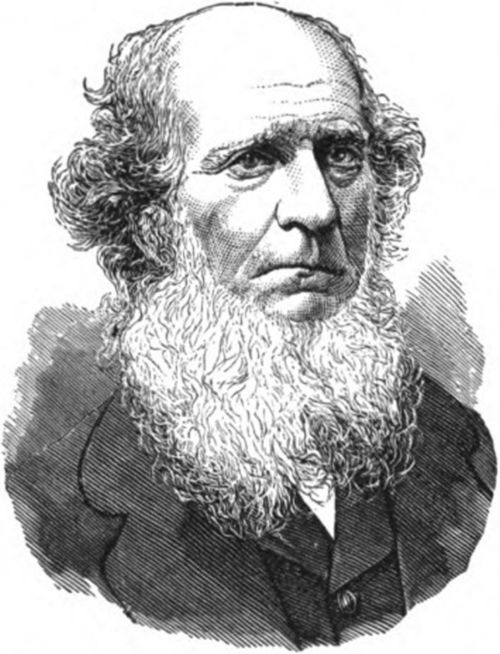
Wm. W. Cary successfully reared a large number of queens for Parsons from one of the two Italian queens of the first successful importation.
S. B. Parsons, a botanist, was commissioned to travel in Italy for the purpose of securing plants for trial in this country. The decision was finally made to authorize him to buy a few colonies of bees as agent for the U. S. Government. Parsons bought ten colonies of bees on the order and also ten for himself which were forwarded on the steamer Argo and landed in New York, April 18, 1860.
According to an account of this importation written by Langstroth, who examined the shipment after arrival, the bees arrived in charge of a young Austrian named Bodmer. Langstroth stated that the shipment was divided into three lots, part of which were addressed to the U. S. Government, part to Mahan, and the rest to Parsons. All the bees for the Government and for Mahan were dead and only a few-left alive in the third lot. Only two queens were saved from the entire lot.
On the advice of Langstroth, one of these queens was placed in the hands of Wm. W. Cary, of Coleraine, Massachusetts. The other was left in the care of the Austrian who accompanied the shipment. Bodmer, according to Langstroth, failed to raise enough queens to pay for the black bees and the honey which were purchased for his use, while Cary was very successful and Italianized a large apiary for Parsons, besides filling all his orders for queens. One hundred eleven of these queens were carried to California by A. J. Biglow, 108 of which arrived in good condition. These bees went by way of the Isthmus of Panama and thus endured a very long voyage.
The bees which Parsons brought over were purchased for him by a man named Herman, a German beekeeper who was author of a book on the Italian bee. They were shipped in cigar boxes with the combs merely wedged in. The loosening of the combs on the way killed some of the queens, while others were drowned with their bees in the honey. As a net result for the expenditure of $1, 200 on the part of Parsons and the Government, only two queens were safely established in this country.
Herman came to this country some years later and was employed by another man in Philadelphia to purchase a large number of queens for him in Italy, but every queen died on board the steamer.
Bodmer brought over a shipment for Wm. Rose, of New York City, which arrived safely, but it is said that he was not very successful in their management after arrival.
The demand for Italian queens was so heavy that numerous efforts were made to import them, with a heavy percentage of failure. Langstroth started rearing queens for sale and for a time was the principal source of supply.
Just what disposition was finally made of the original importation by Mahan is uncertain. In 1897, O. O. Poppleton wrote the story of Dr. Jesse Oren, who lived for many years in Black Hawk County, Iowa. He was said to have bought the first Italian queen that ever crossed the Mississippi River, from Mahan in 1860 for $22. 50. From this we would assume that some of the offspring of the Mahan importation lived, and, if so, he is entitled to credit for the first importation which survived. Edward Kretchmer claimed to have bought the first Italians to come to Iowa, from Parsons in the fall of 1860.
Continue to:


My Books

