


Distillation. Part 5
Description
This section is from the book "Distillation Principles And Processes", by Sydney Young. Also available from Amazon: Distillation Principles And Processes.
Distillation. Part 5
Support Of Raw Material In Still
A point to be considered in the design of a still is the manner in which the raw material is to be supported in the still. In the cases of orris and almonds, mentioned above, no support of the nature of a false bottom is necessary, but a perforated false bottom greatly aids the even distribution of the steam, and is highly desirable if fire heating be used, since it prevents contact between the raw material and the hot bottom of the still. In the case of coarse material, the false bottom presents no difficulty, consisting merely of a perforated plate, but substances such as small seeds may readily obstruct circular orifices or not be retained by the plate. These difficulties may be overcome by using very narrow slits, an inch or two long, instead of circular perforations. These slits need not be more than one or two millimetres wide and will retain the smallest seeds without unduly obstructing the passage' of the steam. If desired a mat of coconut fibre may be placed on the top of the tray, but this is seldom necessary and not an altogether satisfactory procedure.
During distillation the material may alter considerably in volume, either increasing through swelling or diminishing on account of settlement, although frequently, on the other hand, no appreciable change in volume takes place. If the material has the property of settling into an impervious mass it is necessary to introduce additional perforated plates at fixed distances, one above the other, so as to relieve the low portions of the material from the whole weight of that above it. Such an arrangement necessitates that the top of the still be removable. The perforated plates are best kept apart by means of suitably arranged legs, so that the arrangement is similar to a series of tables standing piled one on another. For a still of general utility a design such as the above is probably the best.
As an alternative to the false bottom for supporting the raw material a gauge basket is frequently employed; this also necessitates a still having a removable top. Care, however, must be taken so to construct the basket that steam cannot readily escape past the sides, but penetrates through the material in the basket.
The use of a basket facilitates the speedy removal of the spent charge and its replacement by a fresh charge in a similar basket. Sometimes the spent charge is removed by lifting the false bottom. A widely used still of this type is shown in the sketch 1 (Fig. 205) with a specification appended.
Otto Of Roses
One branch of the essential oil industry that deserves special consideration is the production of otto of roses. Until recent years it has been practically a Bulgarian monopoly, the mountain regions of Bulgaria being especially suitable for the cultivation of roses. The industry is now also being established in France, but the otto produced there appears to be of a slightly different nature. It has been estimated that the output of otto in Bulgaria reached as much as 5000 kilos in 1907 and involved the distillation of roughly ten thousand million roses.
1 Designed by Bennett Sons & Shears, Ltd., London.
The distillation of roses takes place in two stages. First, the roses, while in a perfectly fresh state, are distilled by boiling with water, and there results a saturated solution of the essential oil of the rose, little or no free oil separating out gravitationally. This phenomenon is probably due to the solubility ratio of the oil in the water being of the same order as the rate of the liberation of the oil from the petals or what might be termed the lag-ratio. To obtain the oil as such, advantage is taken of the phenomena pertaining to the distillation of mixed liquids. On distilling the solution the essential oil comes over in the first portions of the aqueous distillate, and being now present in a larger proportion separates as an oily layer on top of the water. The more soluble constituents of the oil remain dissolved in the water - the so-called "rose water" - and hence this water contains a relatively large proportion of phenylethyl alcohol.
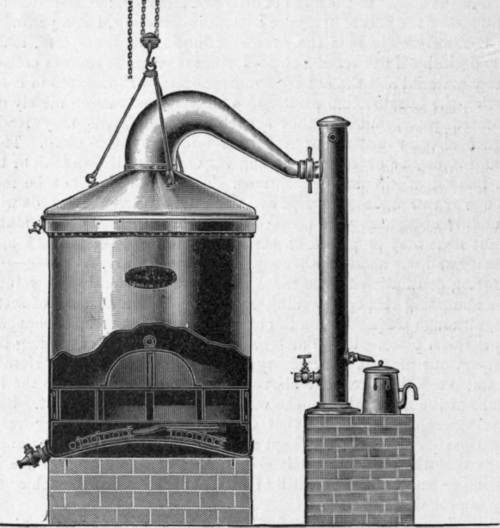
Fig. 205. - Bennett Sons & Shears, Ltd., London, E.C.
A copper still, 1200 gallons capacity, to take a charge of 1 ton of plants and 400 gallons of water, 6 feet diameter by 7 feet deep, with removable copper dome and waterseal joint with suitable fastenings, fitted with discharge pipe and cock, powerful copper steam heating coil with copper stays and steam valve, galvanized iron false bottom and frame resting on gunmetal lugs, with lifting rods and ring to enable the false bottom, etc., to be gradually lifted out of the still and the spent leaves discharged. A copper still-head and lower end connected by a union to an "Ideal" patent condenser with water valve and oil separator.
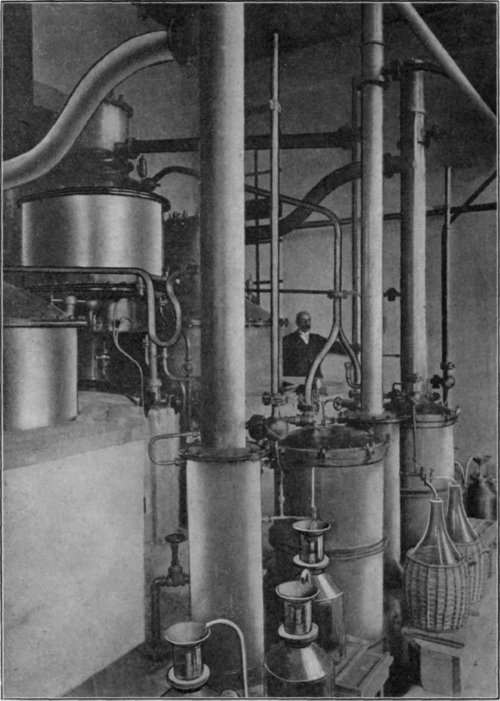
Fig. 206. - Shipkoff & Co., Kazanlik, Bulgaria.
The type of still used in the peasant distilleries has been shown on p. 458; its manner of operation is as follows:1 Into each still is placed one part by weight of fresh roses with five to six parts of water ; about 25 to 30 per cent of the water is distilled off in the course of about 45 minutes. This water is then redistilled and a fraction of about 30 per cent collected; this fraction is very strong in odour and quite turbid in appearance, due to tiny globules of pale yellow oil, which in the course of time unite on the top of the water. The oil is removed by means of a small conical spoon having a hole in the bottom, large enough to allow the passage of the water, yet sufficiently small to retain the oil.
Shipkoff & Co.'s Plant. - The modern installation of Messrs. Shipkoff & Co., constructed by Egrot of Paris, is shown in the accompanying photograph (Fig. 206). Two types of still are employed, one for the first distillation of the roses and the second for the redistillation of the rose water resulting from the first. The former stills are 1.35 metres in diameter and are heated by means of a steam jacket at the bottom ; the latter are 0.85 metres in diameter and are heated by means of steam coils. Vertical tubular type condensers are used to condense the vapours, which are led from each still by pipes of ample dimensions. At the bottom of the respective condensers are storage cylinders and a series of separating receivers. The rose water from the first distillation is transferred to the rectifying stills by means of air pressure or steam injectors, and the hot water from the condensers is used to feed the stills wherein the distillation of the roses takes place in the first instance.
1 From information kindly supplied by Messrs. Shipkoff & Co., Bulgaria.
Continue to:


My Books

