


Gilliflower
Description
This section is from "The American Cyclopaedia", by George Ripley And Charles A. Dana. Also available from Amazon: The New American Cyclopædia. 16 volumes complete..
Gilliflower
Gilliflower, the trivial name of the garden species of mathiola, usually called stocks by the florists, and sometimes stock gilliflowers and gillies. The name gilliflower has a curious origin: the French applied to this and other spicy-smelling flowers the term giroflee, clovescented; this, through the old spellings of gyllofer and gilofre (with the o long), has become our gilliflower. Florists divide the plants into ten-weeks, intermediate, Brompton, and emperor stocks, and each of these into several subdivisions. The ten-weeks and intermediate stocks are annuals, and are garden varieties of M. annua, a native of the seacoast of Europe, and a member of the large order cruciferae; the flower in the wild state is reddish, but cultivation has produced a great variety of colors from pure white to dark purple; the seedsmen's catalogues present new varieties each year. The double varieties do not produce seeds, but such is the tendency to depart from the normal state that the seeds of single flowers will produce plants one half or more of which will be double; the seeds are imported from Germany, where great pains are taken in their production.
The seeds of these varieties may be sown in the open ground when the soil becomes warmed, and treated as ordinary annuals, or they may be sown in a hotbed, the young plants potted when large enough, and later turned out into the open border. Seeds may also be sown in August and September, and the young plants potted and kept over winter in a cool greenhouse, to be turned out in spring. The Brompton stocks must be treated as biennials, as the original species, M. incana, is a biennial or a short-lived perennial. It does not endure our winters, and the plants must be potted and kept either in a frame or a light cellar until spring, or brought into bloom in the greenhouse or window during winter. Choice varieties may be increased by cuttings; and if the plant after flowering is headed back, it may be kept for several years.
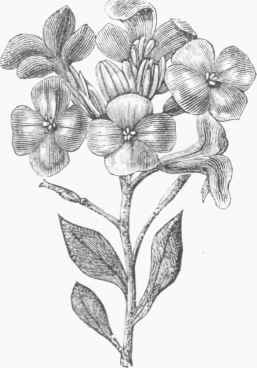
Gilliflower (Mathiola incana).
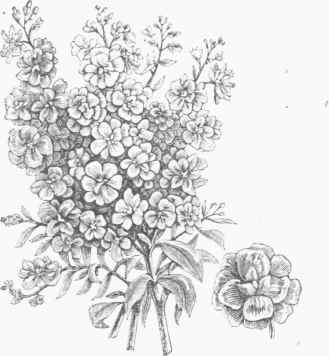
Double Gilliflower.
Continue to:


My Books

