


Fermentation. Part 6
Description
This section is from "The American Cyclopaedia", by George Ripley And Charles A. Dana. Also available from Amazon: The New American Cyclopædia. 16 volumes complete..
Fermentation. Part 6
Bucholz found that no fungi could be detected in milk mixed with a small quantity of carbolic acid, but that nevertheless it slowly turned sour. He therefore inferred that lactic fermentation is not due to the action of living organisms, but to a chemical ferment contained or formed in the milk. But although he found no fungi, minute organic germs may have been present, undiscoverable by the microscopic power which he employed. Bechamp, before making the experiments with chalk described above, had also found that creosote in certain quantities prevented the development of spores of fungi and germs of infusoria, without interfering with the action of ferments. The influence which may be exerted by undeveloped germs under similar circumstances is a matter difficult to determine. There is a suggestion contained in the results of experiments which have been made by Pasteur and others with boiled fermented liquors. It is asserted that they may be preserved for an indefinite time if filtered air or pure oxygen only is admitted into the vessel. Now, Pay en found that certain organic spores did not lose the power of germination till heated to 284° F.; and others maintain that organic germs will retain their vitality at much higher temperatures than this.
It is certain that the decomposition of the proteine body is arrested by boiling, so that its influence is destroyed; but it is quite probable that germs which have hitherto escaped detection by means of the microscope may yet remain alive. If, therefore, it be a fact that boiling will for an indefinite time preserve a fermentable liquor when natural air is excluded, this would seem to indicate that something more than the presence of organic germs is necessary to induce fermentation, such as proteine compounds in a certain state of change, the peculiar action of which, however, may be advantageously manifested in the presence of yeast or some living organism. The facts also that brewers find in their prac-tice that yeast does not exert its powers advan-tageously unless, before being added to the fer-menting tun, it be kept in a warm place till incipient putrefaction takes place, and that washed yeast when added to wort does not produce fermentation until a certain time has elapsed, strengthen the opinion.
The fact, however, that, although undecomposed proteine compounds may be contained in the boiled liquor, they will not begin to decay in the presence of filtered air or pure oxygen, but require the admission of natural air, would indicate that they also require the presence of some body having a chemical or catalytic force not possessed by pure oxygen, which is re-moved from the atmosphere by filtration.

Fig. 4.- Fructification of Penicillium crus-taceum (Hallier).
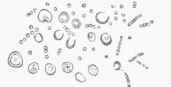
Fig. 5.-Spores of Penicillium crus-taceum bursting in water and setting free their contained particles, micrococci, which unite in rows or chains (Hallier).
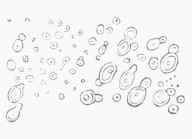
Fig. 6.-Cryptococcus in various grades of development from Penicillium (Hallier).
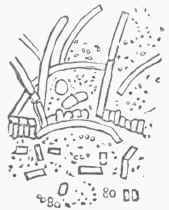
Fig. 7. - Arthrococcus, found in sour milk (Hallier).
Continue to:


My Books

