


Shad Culture. Part 2
Description
This section is from the book "Fish Hatching, And Fish Catching", by R. Barnwell Roosevelt, Seth Green. Also available from Amazon: Fish Hatching, And Fish Catching.
Shad Culture. Part 2
When the mature shad prepare to perform the duty of propogating their race they direct their energies to that, and without intermission. They seem to be pressed by an overpowering necessity, and will do their best to overcome all obstacles that nature or art may have placed in their way, and they never rest until they have reached their proper spawning grounds.
With all this class of fish, it is essential that the breeders should reach the upper waters of the rivers, where alone they can spawn and hatch their young. Were a dam or any impassable obstruction placed across the river for a single season, the entire yield of that year would cease, and a new supply would have to be obtained.
Shad being a migratory fish, spend the greater part of their time in the sea where they find their food, for, like most migratory fish, they do not feed in the fresh water; there they prey on shell fish or other small creatures, which, while inexhaustible in number are wholly useless directly to man. In February,March and April,May, June and July, urged by the re-productive instinct they ascend into the fresh water to deposit their eggs. Unlike salmon however, they do not go far up our rivers nor require special conditions of locality or temperature to complete the procreative art successfully. They seek out some rocky ledge where there is a gentle current, and uniting in pairs press their vents together and extrude the spawn and milt in a spasm of amatory pleasure. They build no nests, the act of spawning is performed while the loving pair are in rapid motion - so rapid that they often spring out of water and their fluttering along its surface is clearly distinguishable. Their only precaution against predatory animals is that they spawn at night. The eggs are left to themselves to the mercy of their enemies and to fate. The parents, as soon as they are through this duty of their existence return lean and wasted to the ocean to recuperate and enjoy themselves.
Here is incredible wastefulness; countless creeping, crawling and swimming creatures live upon those same eggs. These sneaking enemies search the bottom and pry into every cranny and crevice for them. Their hunger is unsatiable and their energy untiring. But, injurious as they are other dangers are more destructive. A little increase of current will wash nine-tenths of the eggs off the rocky ledge into the muddy flats where they perish for want of aeration. A heavy rain will roil the water, and on its subsidence there will be deposited upon the eggs a thin covering of sediment which will destroy them all absolutely and without exception. Eggs of fish in order to hatch must be continually surrounded with fresh water; they require the oxygen of changing water just as land animals require the oxygen of changing atmosphere. Shut a man in a small room, or a mouse under a glass jar, and as soon as he shall have exhausted the vitality of the air in the confined space he will die. Fish and their eggs can be smothered in precisely the same way. A muddy deposit upon eggs excludes aeration and death ensues to a certainty. There is no exception to this rule, and this is the most fatal peril to which shad spawn is exposed and which annually decimates the yield of young fish.
So great are these risks that shad could never have held their own were it not for the compensation of their wonderful fecundity. They produce ten thousand eggs to each pound of weight, which is ten times as many as salmon or trout and it is not unusual to obtain sixty thousand eggs from a single mature female. This is their protection, that among the vast number laid some will hatch, and although the per centage is small the aggregate has been large enough to maintain the supply. But here arises the most serious trouble when man interferes with the established order of nature. Accident sweeps away just such a proportion, the water and land creatures which feed on the eggs will abate no jot or tittle of their exactions, so when man steps in he upsets the scale and tumbles the whole shad fishery into confusion and ruin. It requires a greater annual contribution to keep up the yield than with trout; it falls off proportionately greater when this contribution is cut down.
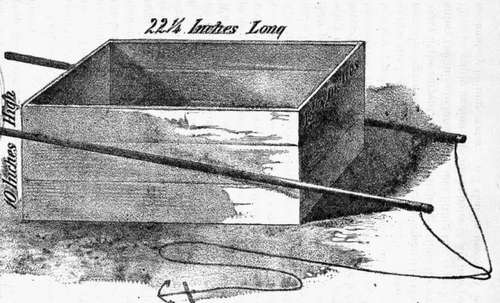
Shad Hatching Box (Long Float.)
Continue to:


My Books

