


The Grindstone
Description
This section is from the book "Handy Man's Workshop And Laboratory", by A. Russell Bond. Also available from Amazon: Handy Man's Workshop And Laboratory.
The Grindstone
The grindstone is generally purchased with frame complete as shown. The frame is usually 24 inches high by 38 inches in length, out to out of handles, which are made of 2 1/2 by 1 5/8 inch stuff, shaped at the ends to 1 1/2 inch diameter by 4 inches long. The legs are 1 3/4 by 1 1/2 inches, spread at the base 33 inches one way and 11 1/2 inches at the ends, inside dimensions. The handles are spaced 9 inches apart outside dimensions. A piece of timber 1 1/4 inches thick by 10 inches deep is bolted to the legs at each end. The treadle rod and guides are made of 1/4-inch round iron. The stone can be turned by hand or foot power, the handle being easily removed. The bearings are shown with the dust cap removed, to show the rollers. Under the stone is shown, in broken lines, a wooden water trough resting upon a 1-inch board, which in turn rests upon two strips nailed to the legs. Some mechanics object to this manner of wetting the stone, claiming that it washes off all the powdered stone necessary for the grinding process, Instead they put an ordinary tin can. with a small hole punched in the bottom, just above the stone, allowing the water to drop on the stone instead of washing it.
Artificial Grindstone
A grindstone made from one-half best Portland cement and one-half silica sand may be used in grinding glass to take the place of the wheel caster. The materials must be thoroughly mixed and evenly tamped. The advantage of this stone is that when properly made there will be no hard and soft spots, and it will grind glass without scratching. The cost is about ten per cent of that of the common grindstone.
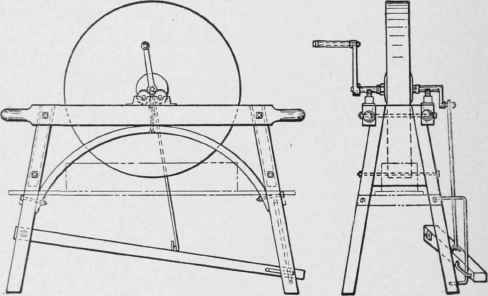
Fig. 27 - Frame construction for grindstones.
Continue to:


My Books

