


How To Forge A Mast Head Or Boom Ring
Description
This section is from the book "Handy Man's Workshop And Laboratory", by A. Russell Bond. Also available from Amazon: Handy Man's Workshop And Laboratory.
How To Forge A Mast Head Or Boom Ring
On account of the severe strains to which the lugs on a masthead are subjected, they and the ring are usually made from one and the same piece of iron, instead of the former bein-welded on after the ring is made. The ring is made in two halves, the iron being cut sufficiently long to make two lugs, and go half way round the masthead or ends of main or jib boom. The comparative length of the iron is given in Fig. 348 at 1. The diameter of the bands, of course, varies, and the section of iron used is in proportion. The position of the lugs is marked out. and the bar heated and bent into shape (2). the ends being shaped for welding, when the two halves are brought together, to form the circle. The lugs are closed and welded on the next heat (3). At 4 is shown the half band, a similar one being made in the same manner. The holes for the wire ropes are countersunk on both sides, and are made at the roots of the lugs, close up to the bands. They are flattened out when being welded, their depth being a little more than the depth of the band, to give more metal in the direction of the pull.
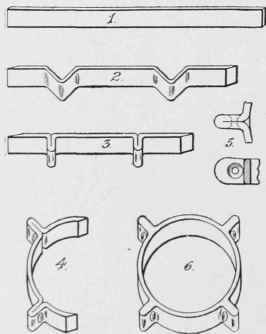
Fig. 348 - Progressive steps in the forging of a masthead.
To give a smooth surface on the inside of the band, a piece of metal called a "fish" is welded in the "gutters" formed at the roots of the lugs. These several details are shown at 5. The two halves are next welded, as shown in the completed band (6). The outside edges of the band, top and bottom, are rounded off, and all sharp corners on the lugs removed, to prevent any accidental wear on the ropes. The top of the mast or ends of the booms are cut down to a shoulder, the thickness of the bands in width, and the bands driven on.
Continue to:


My Books

