


Home-Made Saw Filing Vise
Description
This section is from the book "Handy Man's Workshop And Laboratory", by A. Russell Bond. Also available from Amazon: Handy Man's Workshop And Laboratory.
Home-Made Saw Filing Vise
Desiring a saw-filing vise that would allow an ordinary saw to be filed or set from end to end without change and without chattering, to hold the saw rigidly and yet so that it could be instantly released, the writer made a device as follows: In the barn loft there was a south window with a good light. To the 3 by 4 studding at each side of the window and at right angles to it, at a convenient height, two pieces of wood 1 by 12 by 12 inches were firmly nailed, thus forming two brackets. Two pieces of straight 2 by 1/4-inch flat iron, long enough to go across these brackets, were found, also two straight pieces of 1 by 1-inch iron (discarded square-bed carriage axles with stubs off). The latter pieces were faced with the flat iron by means of a couple of countersunk-head stove bolts. Two pieces of 2 by 2-inch angle iron would have done as well. These made the two jaws of the vise, and they were placed across brackets in front of window, with a wooden strip between the inside jaw and the studding to take the file thrust. On the inner side of each bracket a lever of 1 1/4-inch square hardwood was pivoted, with the upper end bearing against the outer jaw. Two circles of wood were cut and mounted on bolts in the brackets, but an inch off center, so that they could be used as cams to press against the lower ends of the lever and force the upper ends firmly against outer jaw, thus clamping the saw firmly in place. A handle was secured to each cam, with which to tighten and release the vise.
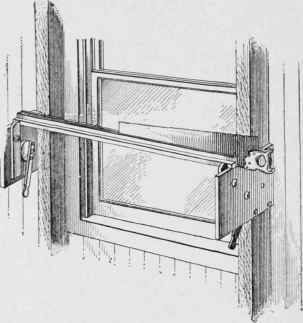
Fig. 62 - The saw vise attached to a window frame.
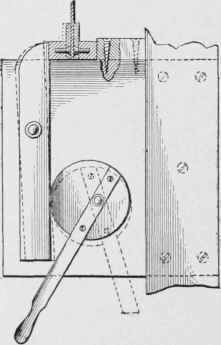
Fig. 63 - Cross-section showing the cam.
Continue to:


My Books

