


A Simple Experiment In Static Electricity
Description
This section is from the book "Handy Man's Workshop And Laboratory", by A. Russell Bond. Also available from Amazon: Handy Man's Workshop And Laboratory.
A Simple Experiment In Static Electricity
Of the many interesting effects obtainable with static electricity, one of the most pleasing and instructive is the ringing of a bell by alternate attraction and repulsion of a freely-moving insulated body. The experiment, however, as ordinarily arranged, is not -easily available for home demonstration, owing to the usual requirement of Leyden jars and machinery for charging.
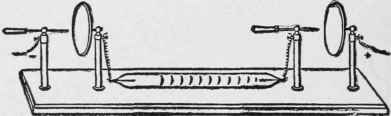
Fig. 205 - Atmospheric rheostat for stratification in vacuo with Wimshurst.
Fig. 205 shows how a very pretty impromptu exhibition of the experiment can be given, using only such simple apparatus as can be assembled in five minutes' time from among the common objects of the household.
A large round pie tin is supported bottom upward upon a clean inverted glass tumbler. A small bell borrowed for the occasion from the family alarm clock is mounted at a distance of one inch from the pie tin upon a sharpened pine stick inserted in a base made from a large potato, which has had a flat slice cut from its under side to make it set level. The lower edge of bell and pie tin are adjusted to exactly the same height.
From the family button box select a very small round metallic button shaped like a shoe button, and not larger if possible than a very small pea. Suspend this button by its eye with a silk thread from a support made by inserting a slender stick about 14 inches long into a second potato base, as shown in the illustration. Adjust the suspended button so that it will hang exactly in the middle of the space between the bell and pie tin. and at a height coincident with the edge of the bell. The adjustment for height is easily made by drawing the thread through a small knife cleft in the end of the stick.
Cut a piece of newspaper of a width equal to the diameter of the pie tin, and of a length 2 or 3 inches greater than the width. Lay the paper upon a piece of smooth board, which has been previously well heated in an oven or over the gas range. Hold the paper down upon the hot board by one of its ends, and with the palm of the hand rub it strongly and briskly all over in one direction, using considerable pressure and taking care that, the hand is dry and free from all perspiration. After a few strokes the paper will become powerfully electrified, and will be found strongly adherent to the board by electrical attraction. Now lift the paper quickly by its two ends, and drop it across the tin, being careful not to let the fingers touch the tin. See also that the corners of the paper do not bend down far enough to touch the table. As the charged paper strikes the tin, the little clapper begins a vigorous vibration, striking alternately the bell and the pie tin, producing a continuous ringing which persists for some time. After the button has finally ceased it-- motion, the mere lifting of the paper off the tin causes it to begin again with renewed vigor.
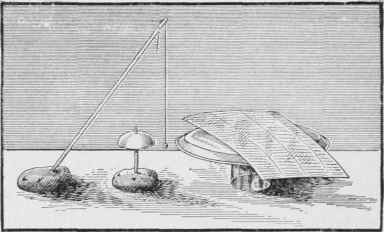
Fig. 206 - Ringing a bell by static electricity.
Under good atmospheric conditions it is not always necessary that the charged paper actually touch the tin plate.
Oftentimes its mere presence in the vicinity of the plate, 3 or 4 inches above it, is sufficient to set the bell ringing by induction. If a small hard pellet about the size of a buckshot (made by rolling a little pinch of fresh bread between the fingers) be substituted for the metallic clapper, the motions of the pellet, by reason of its comparative lightness, will be much exaggerated, and the little ball will execute many comical and unexpected gyrations.
The tumbler used must be one of thin blown glass to obtain perfect insulation, the heavy tumblers of thick pressed glass being entirely worthless for the purpose. Also, a detail not to be forgotten is to render the wooden support for the bell electrically conductive by wetting its surface thoroughly all over, to allow the free escape of the electricity brought to the bell from the pie tin by the successive contacts of the clapper. Like all other exhibitions of static electric phenomena, the one here described succeeds best in cold weather, it being practically useless to expect satisfactory results from it with the atmosphere outside above the freezing point, though its action is always very gratifying at other times. The experiment as here illustrated constitutes a very attractive parlor demonstration, which, from its simplicity of arrangement and certainty of action, is always in favor with the young.
Continue to:


My Books

