


Cellar Window Sash
Description
This section is from the book "Modern Carpentry And Building", by W. A. Sylvester. Also available from Amazon: Modern Carpentry And Building.
Cellar Window Sash
Size of Glass. | Thickness. | No. of Lights. | Height. | ||||||
6 | x | 8 | in. | 1 1/4 | in. | 3 | lights. | 1 | It. high |
6 | x | 8 | " | 1 1/4 | " | 4 | " | 1 | " |
6 | x | 8 | " | 1 1/4 | " | 4 | " | 2 | " |
7 | x | 9 | " | 1 1/4 | " | 2 | " | 1 | " |
7 | x | 9 | " | 1 1/4 | " | 3 | " | 1 | " |
7 | x | 9 | " | 1 1/4 | " | 4 | " | 1 | " |
7 | x | 9 | " | 1 1/4 | " | 4 | " | 2 | " |
8 | x | 10 | " | 1 1/4 | " | 2 | " | 1 | " |
8 | x | 10 | " | 1 1/4 | " | 3 | " | 1 | " |
8 | x | 10 | " | 1 1/4 | " | 4 | " | 1 | " |
8 | x | 10 | " | 1 1/4 | " | 4 | " | 2 | " |
8 | x | 12 | " | 1 1/4 | " | 3 | " | 1 | " |
8 | x | 12 | " | 1 1/4 | " | 4 | " | 1 | " |
8 | x | 12 | " | 1 1/4 | " | 4 | " | 2 | " |
9 | x | 11 | " | 1 1/4 | " | 3 | " | 1 | " |
9 | x | 12 | " | 1 1/4 | " | 3 | " | 1 | " |
9 | x | 12 | " | 1 1/4 | " | 4 | " | 1 | " |
9 | x | 12 | " | 1 1/4 | " | 4 | " | 2 | " |
9 | x | 13 | " | 1 1/4 | " | 3 | " | 1 | " |
9 | x | 13 | " | 1 1/4 | " | 4 | " | 1 | " |
Size of Glass. | Thickness. | No. of Lights. | Height. | ||||||
9 | x | 13 | in. | 1 1/4 | in. | 4 | lights. | 2 | It. high |
9 | x | 14 | " | 1 1/4 | " | 3 | " | 1 | " |
9 | x | 15 | " | 1 1/4 | " | 3 | " | 1 | " |
9 | x | 16 | " | 1 1/4 | " | 3 | " | 1 | " |
9 | x | 17 | " | 1 1/2 | " | 3 | " | 1 | " |
9 | x | 18 | " | 1 1/2 | " | 3 | " | 1 | " |
10 | x | 8 | " | 1 1/4 | " | 3 | " | 1 | " |
10 | x | 12 | " | 1 1/4 | " | 3 | " | 1 | " |
10 | x | 13 | " | 1 1/4 | " | 3 | " | 1 | " |
10 | x | 14 | " | 1 1/4 | " | 3 | " | 1 | " |
10 | x | 15 | " | 1 1/4 | " | 3 | " | 1 | " |
10 | x | 16 | " | 1 1/4 | " | 3 | " | 1 | " |
10 | x | 17 | " | 1 1/2 | " | 3 | " | 1 | " |
10 | x | 18 | " | 1 1/2 | " | 3 | " | 1 | " |
11 | x | 15 | " | 1 1/2 | " | 3 | " | 1 | " |
11 | x | 16 | " | 1 1/2 | " | 3 | " | 1 | " |
11 | x | 17 | " | 1 1/2 | " | 3 | " | 1 | " |
11 | x | 18 | " | 1 1/2 | " | 3 | " | 1 | " |
12 | x | 16 | " | 1 1/2 | " | 3 | " | 1 | " |
12 | x | 18 | " | 1 1/2 | " | 3 | " | 1 | " |
Blinds are the same width as windows, and are one-half inch longer. There are usually about 75 feet of line in a hank.
Skylights or Hotbed Sash. - Outside measures, 3 feet X 6 feet; 3 feet X 5 feet; 2\ feet X 4 feet; 2^ feet X 3$ feet; 2 feet X 3 feet.
Note. - Frames for cellar-window sash. For 1 light high, and for 2 lights wide, make frame 3$ inches larger than glass. For 2 lights high, and for 3 lights wide, make frame 3£ inches larger than glass.
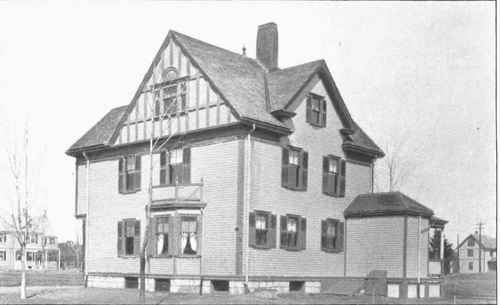
RESIDENCE OF W. A. SYLVESTER, S. W VIEW. (For Framing plans see buck part of this book.)
Bins for Grain. - A Winchester bushel is 18 1/2 inches in diameter by 8 inches deep, and contains 2,150.42 cubic inches, nearly 2,150 1/2 cubic inches, and is used for measuring fine stuff like grain, beans, etc.
To estimate the size of a box or bin to hold a certain number of bushels, multiply the number of cubic inches in one bushel by the number of bushels which the bin is to hold: this will give the number of cubic inches which the bin will contain. Now assume any two of the three dimensions of the bin, say the length and the width; multiply the number of inches in length by the number of inches in width; divide the number of cubic inches to be contained in the bin by this product: the result will be the number of inches in depth of the bin. A cubic foot contains about f of a bushel.
A box 9 inches x 9 inches x 6 1/2 inches deep will contain 1 peck.
A box 12 inches X 12 inches X 7 1/2 inches deep will contain i bushel.
A box 14 inches X 14 inches X 11 inches deep will contain 1 bushel.
5-bushel box or bin: 30 inches x 30 inches X 12 inches deep, or 25 inches X 25 inches X 17 3/16 inches deep.
10-bushel bin: 30 inches X 30 inches x 24 inches deep, or 2 feet X 3 1/2 feet X 21 5/16 inches deep, or 3 1/2 feet X 3 1/2 feet X 12 3/16 inches deep.
15-bushel bin: 3 1/2 feet X 3 1/2 feet X l8 1/4 inches deep, or 3 feet x 4 feet x 18 5/8 inches deep.
20-bushel bin: 3 1/2 feet X 3 1/2 feet X 24 3/8 inches deep, or 3 1/2 feet x 4 feet X 21 5/16 inches deep, or 3 feet X 4 feet X 24 7/8 inches deep.
25-bushel bin: 3 feet X 4 feet X 3l 1/8 inches deep, or 3£ feet x -1£ feet x 23 11/16 inches deep, or 3 feet X 5 feet X 24 7/8 inches deep.
30-bushel bin: 3£ feet X 4 1/2 feet x 28 1/2 inches deep, or 3 feet X 5 feet X 29 7/8 inches deep.
40-bushel bin: 4 feet X 5 feet X 29 3/4 inches deep, or 4 feet X 6 feet x 24 /8 inches deep.
50-bushel bin: 4 feet X 6 feet X 31 1/8 inches deep, or 4 1/2 feet x 7 feet X 2314 inches deep, or 5 feet X C feet x 24 7/8 inches deep.
A common flour-barrel will hold about 3 1/3 bushels of grain or other fine stuff.
Bins for Apples, Potatoes, etc. - In measuring coarse stuff, like apples, potatoes, etc., the bushel is heaped so that the cone, formed by the stuff being heaped, shall be not less than 6 inches in height. A heaped bushel contains 2,747.7 cubic inches, about 2,747 3/4 cubic inches.
5-bushel box or bin: 30 inches x 30 inches x 15 1/4 inches deep, or 2 feet x 3 feet x 151 inches deep.
10-bushel bin: 2£ feet x 3 1/2 feet x 2 3/4 3/4 inches deep, or 3feet x 4 feet x 16 inches deep.
15-bushel bin: 3 feet x 4 feet x 23 7/8 inches deep.
20-bushel bin: 3 feet x 4 feet x 32 inches deep, or 3 1/2 feet X 4 feet x 27 1/4 inches deep.
25-bushel bin: 3i feet x 4 feet x 34 inches deep, or 3 feet x 5 feet X 31 3/4 inches deep, or 3 1/2 feet x 5 feet x 27 1/4 inches deep.
30-bushel bin: 3 feet x 5 feet x 38 inches deep, or 3 1/2 feet x 5 feet x 32 3/4 inches deep.
40-bushel bin: 3 1/2 feet x 6 feet x 36 1/4 inches deep, or 4 feet x 6 feet X 31 3/4 inches deep.
50-bushel bin: 4 feet x 6 feet X 39 3/4 inches deep, or 5 feet X 5 feet x 38 1/8 inches deep, or 5 feet by 6 feet x 31 f inches deep.
A common flour-barrel will hold about 2 1/2 bushels of apples or potatoes.
To estimate the Size of a Tank to hold a certain Number of Gallons. - A gallon contains 231 cubic inches. A cubic foot contains about 7 1/2 gallons. Multiply the number of cubic inches in one gallon by the number of gallons, which will give the number of cubic inches which the tank will contain; now assume any two of the three dimensions of the tank, say the length and the breadth; multiply the number of inches in length by the number of inches in breadth; divide the number of cubic inches contained in the tank by this product: the result will be the number of inches in depth of the tank. A barrel contains 31 1/2 gallons.
To estimate the Size of a Bin to hold a certain Number of Tons of Coal. - A cubic foot of anthracite coal weighs from 50 to 55 pounds: so a ton will occupy a space of 36 or 40 cubic feet (36 cubic feet is usually considered correct). Multiply the number of tons which the bin is to contain by the number of cubic feet contained in one ton, which will give the number of cubic feet which the bin is to contain; assume any two of the three dimensions of the bin, say the length and breadth; multiply the length, in feet, by the breadth, also in feet; divide the number of cubic feet contained in the bin by this product: the result will be the depth of the bin in feet.
If a ton of coal occupies 36 cubic feet, then a bin 4 feet x 4 1/9 feet will hold a ton of coal for each 2 feet in depth; a bin 4 feet x 6 feet will hold a ton of coal for each 18 inches in depth; a bin 6 feet x 6 feet will hold a ton of coal for each 12 inches in depth.
Miscellaneous. - In painting, all knots and sappy places should have one or two coats of shellac varnish previous to the first coat of paint. In nice houses, the entire woodwork of the inside is given one or two coats of shellac previous to painting. This prevents the knots and sap from staining the paint yellow.
Continue to:


My Books

