


Notes And Queries On Hot-Water Supply Air-Bound Piping
Description
This section is from the book "American Plumbing Practice", by The Engineering Record. Also available from Amazon: Plumbing: A working manual of American plumbing practice.
Notes And Queries On Hot-Water Supply Air-Bound Piping
F. A. C, Chicago, writes:
" The inclosed sketch represents a defective hot-water supply in a private residence in Chicago. B B indicates the hot-water pipe and C the cold. It will be noticed that the pipe B is carried down from boiler to basement, thence suspended from ceiling and carried a distance of about 7 feet, from which point it extends up direct to second floor to washbasin in bathroom A branch not shown is taken off in the basement and extends to laundry tubs.
" When the temperature falls very low several minutes will pass before hot water flows to second floor; there is frequently no flow at all when faucet is first opened, and water is always cold. The cause of this trouble is in pipe B at A, where air accumulates, causing it to become air-bound, produced by elevation of pipe at this point. To remove the air it is necessary to open faucet in laundry tubs, which soon releases the air, restoring flow to normal condition, permitting hot water to ascend to basin on second floor.
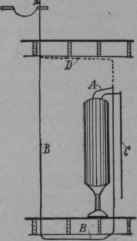
"The writer advised a change in the pipe B by extending it up to ceiling of first floor, connecting with ascending pipe as shown by broken lines at D. When this change is made hot water can be drawn at once in bathroom.
"I present the following to be answered by your readers, as a reply may be of interest.
"The tap and service pipe for this dwelling are each one-half inch in diameter. The head is diminished during early portion of the day, caused by an increase in the consumption at this time. To improve the supply a plumber states that the head would be improved if service pipe was increased to 1 inch in diameter. His reason for this is that a greater quantity of water would be carried into dwelling through a 1-inch pipe, thereby increasing the height of flow on second floor. Is the plumber correct ?"
Continue to:


My Books

