


The Joints
Description
This section is from the "Blast Furnace Construction In America" book, by J. E. Johnson, Jr.. Also see Amazon: Blast Furnace Construction In America.
The Joints
The principle of these stoves is obviously very simple, but their construction and the maintenance have developed a number of problems. The joints between the U-pipes and the bed pipes are universally sealed with what is known as a rust joint, a mixture of fine iron borings and sal ammoniac made into a stiff paste and caulked into place. This mixture rusts with great rapidity; this converts the whole into an homogeneous mass of iron oxide, which is firmly cemented to the adjacent surfaces of solid metal.
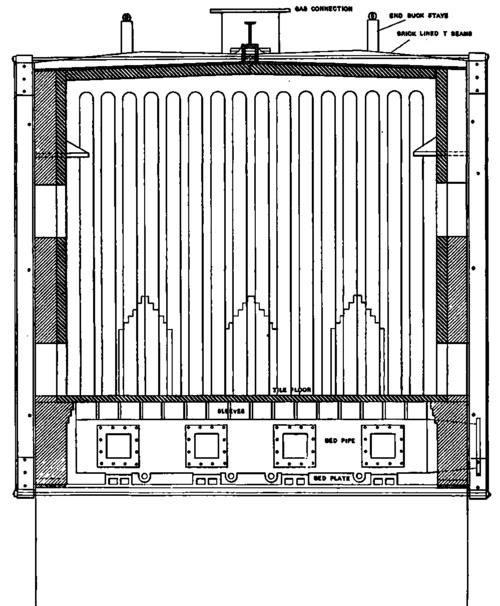
Fig. 127. Iron pipe stove, Glendon type; transverse section.

Fig. 128. Iron pipe stove, Glendon type; sectional plan.
A cast-iron sleeve is slipped over each of these joints and the iron borings run down between it and the surfaces to be sealed. The sleeve is large enough to go over the nozzles on the bed pipes and the ends of the U-pipes, and about 10 in. in depth, so as to extend 5 in. on each side of the joint when resting on the bed pipe. When this is properly done a first-class joint is secured. The joint is preserved as far as possible from the direct heat of the flame by a floor of flat tile bricks laid between the rows of pipes and resting on the sleeves so as to make a fireproof brick floor above the level of the joints.

Fig. 129. Heating pipes.
The U-pipes immediately exposed to the gas coming in from the combustion chamber receive the severest treatment, and these are protected from the direct action of the flame by casting a dove-tail on the side of the pipes placed next to the combustion chamber and sliding over this dove-tail firebrick tiles with a similar dove-tailed slot. These are put on the pipes so as to cover them from top to bottom on the side next to the combustion chamber and greatly increase their life.
Baffle Walls
In order to prevent the gas from the burners from passing along the top of the stove to the stack without going down around the pipes, baffle walls are built as shown, with openings through their bases through which all the gas has to pass. This forces the gas current to the bottom twice in its course to the stove and secures a good distribution of the flame over the surface of the pipes.
Continue to:


My Books

