


Special Factors Influencing Changes In Body-Weight
Description
This section is from the book "Human Vitality And Efficiency Under Prolonged Restricted Diet", by Francis G.BENEDICT, Walter R. Miles, Paul Roth, And H. Monmouth Smith. Also available from Amazon: Human Vitality and Efficiency Under Prolonged Restricted Diet.
Special Factors Influencing Changes In Body-Weight
Following the initial period of loss in weight resulting from the material curtailment of diet, there was with all of the men in Squad A more or less variation above or below the lower weight-level. These fluctuations can be explained in several ways: First, they may have been due to actual loss of tissue on account of continued undernourishment, with subsequent additions to the body-tissue as a result of extra feeding; second, they may have been due, in part at least, to variations in the amount of feces passed at different times. This applies especially to one of the subjects (Pec), whose habits of defecation were unique in our experience. With this subject periods of 5 or 6 days frequently passed without defecation, while at times very large quantities of feces were excreted. Finally, in spite of our precautions to secure an empty bladder and minimum drinking of water for each subject before weighing, considerable urine may have been retained. But probably the largest factor influencing the body-weight was the storage of water. It was for this reason that we insisted upon relatively long periods of constancy in weight before attaching any special significance to the measurements obtained.
Fortunately, the influence of the storage of water upon the changes in body-weight gives us a good suggestion as to the character of the gains in weight following the Christmas recess. Were these gains in weight due to actual body-tissue, particularly fat, it would require very considerable dietetic restriction and great muscular activity to reduce the excess weight. It is commonly assumed that it would be extremely difficult for a man to utilize 9,000 calories in one day. A man at very severe muscular work is supposed to require approximately 6,000 calories. While these men exercised considerably after the Christmas vacation, and much more than normally, their muscular activity was in no wise comparable to the severe work of a Canadian lumberman, and it is doubtful if their total metabolism could have reached much more than 4,000 or 4,500 calories per day during this short period of excessive exercise. On this basis it would require two days of pure fat combustion to remove 1 kg. of fat from the body. As the charts show, however, the loss in weight with all the subjects was very rapid after the return from the Christmas vacation; hence we believe that the increases in weight were more apparent than real in that they were due in large part to the storage of water rather than to the addition of organized tissue. This seems the more probable inasmuch as the diet commonly consumed when the subjects were free from restriction contained an excess amount of carbohydrate, which would tend to promote the retention of water in the body. This experience reminds us strongly of the error Grafe1 was led into in assuming that a return to weight of a previously starved dog indicated complete replenishment of lost tissue.
During the Christmas recess the men reported maximum gains in weight which were, in some cases, not far from 5 or 6 kg. Pea reported a gain of about 9 kg. Subject Tom was operated upon for hemorrhoids during the Christmas recess; accordingly his gain was barely 1 kg. Most of the men underwent strict training in the last few days of the vacation to reduce their weight, and several (Mon, Pec, and Gul) abstained from food entirely on January 5 and 6. It must be remembered, therefore, that the weights recorded in the curves for January 7 by no means represent the maximum increase during the Christmas recess as a result of the freedom from the restricted diet.
1 See page 25 of this monograph.
Body-Weight Curves Of Squad B
From the data already given in table 10 it can be seen that most of the men in Squad B had a tendency to increase in weight during the academic year. These increases are shown in the body-weight curves for the men in Squad B (figs. 69 to 73). With Har, Fis, Sne, and Lon there was considerable fluctuation in the weight prior to the dietetic restriction, but in general the body-weight tended to increase. The extreme regularity of the curve following the dietetic restriction is, however, strikingly significant. These men were all given a diet containing approximately 1,400 net calories. The resultant fall in body-weight is markedly uniform and to such a degree that the curves might almost be superimposed in many instances. When one considers that we deal here with men of varying initial weights and varying activities, this uniformity is indeed surprising. An exception to this uniform fall in weight is shown by the curve for Kim, whose loss in weight was less than that for any of the other men in Squad B. Kim was, however, one of the men who was most deficient in body-weight at the start, being 4.4 kg. below normal weight. On the other hand, the curve for Tho, who was even more deficient in weight, shows a very rapid fall as a result of the restriction in diet.
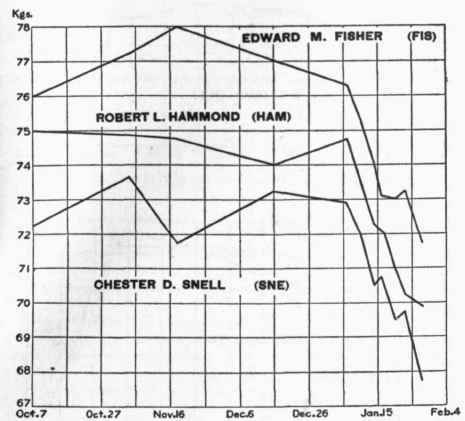
Fig. 69. - Body-weight curves of Fis, Ham, and Sne.
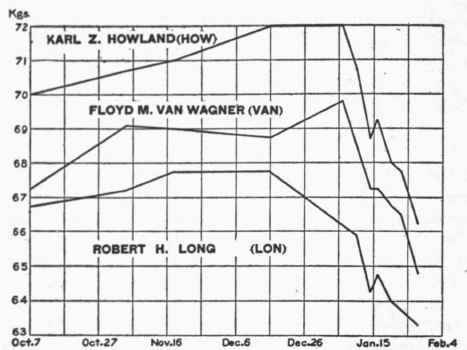
Fig. 70. - Body-weight curves of How, Van, and Lon.
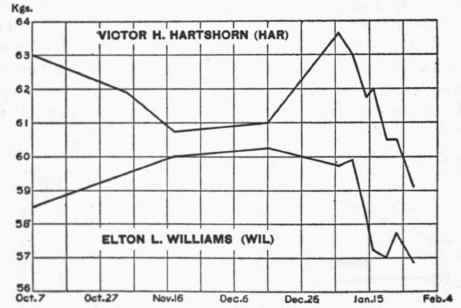
Fig. 71. - Body-weight curves of Har and Wil.
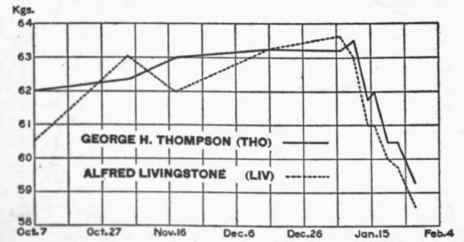
Fig. 72. - Body-weight curves of Tho and Liv.
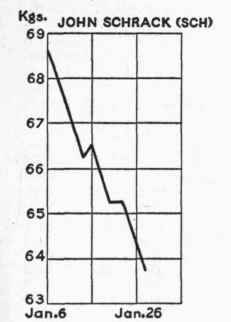
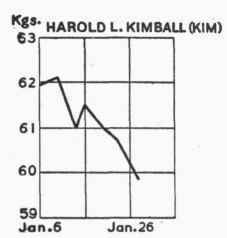
Fig. 73. - Body-weight curves of Sch and Kim.
Continue to:


My Books

