


IV. Syphilis And Tuberculosis Of Larynx And Trachea
Description
This section is from the book "A Manual Of Pathology", by Joseph Coats, Lewis K. Sutherland. Also available from Amazon: A Manual Of Pathology.
IV. Syphilis And Tuberculosis Of Larynx And Trachea
1. Syphilis
In the secondary period of syphilis the larynx is frequently the seat of catarrhs which are to be classified along with the various inflammations of that stage. There may be in this period slight erosions of the surface, but no proper ulceration.
In tertiary syphilis the larynx is occasionally attacked, and we have here, as in other situations, irregular infiltrations of granulation tissue, gummatous new-formations, ulcerations, etc. (See Fig. 352).
The lesions may be at first comparatively superficial, consisting of thickenings and elevations of the mucous membrane so as to form irregular papillary projections (Condylomata), which sometimes imitate in appearance epithelioma of the larynx.
Much more characteristic, however, are deep infiltrations and ulcerations. The mucous membrane and submucous tissue are infiltrated and thickened, ulcers develop, first as a general rule in the epiglottis but they are prone to extend deeply and widely so as to destroy large portions of the epiglottis or the whole of it. We have already seen that the ulceration may lead to perichondritis and necrosis of the, cartilage with still wider results. With ail this there is great new-formation of connective tissue with corresponding deformity, and, if the ulcers heal, the contraction of the cicatricial tissue leads to great deformity and not infrequently to such obstruction of the glottis as to require tracheotomy.
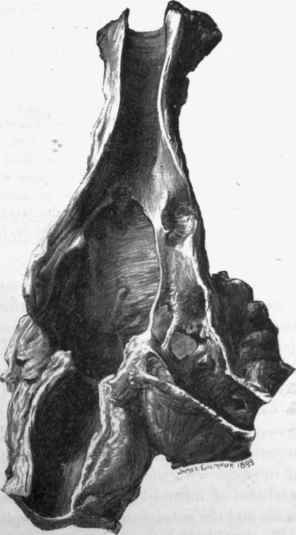
Fig. 352. - Syphilis of trachea and bronchi.
Congenital syphilis sometimes manifests itself in the larynx. It may be in the form of a superficial catarrh, sometimes accompanied by oedema glottidis, or there may be a superficial infiltration of the mucous membrane. It is rare to have a deep infiltration and ulceration such as is common in ordinary syphilis.
Continue to:


My Books

