


Wines And Spirits. Part 14
Description
This section is from the book "The Beverages of the Chinese; Kung-fu or Tauist Medical Gymnastics; the Population of China; A Modern Chinese Anatomist and A Chapter in Chinese Surgery.", by John Dudgeon. Also available from Amazon: Kung Fu, or Taoist Medical Gymnastics.
Wines And Spirits. Part 14
Officials from the North, proceeding to the South and there acquiring the opium habit, on their return often state that their reason for beginning it was the miasma of the South, which the people say is fatal if encountered. This pestilential vapour is termed chang The opium evil exists largely in large non-malarious tracts of the Chinese Empire. The supposed prophylactic properties of spirits in warding off fevers and other diseases do not fall within the scope of the present Paper. Some of the suggestions here thrown out seem certainly worthy of our imitation. Part of the present Paper was originally intended for an article on the Drink Question in China, the sequel to one published a few years ago in one of our first class provincial newspapers on the Norwegian Drink System, after a visit paid to that country and Sweden, and investigation into the subject on lines similar to those since followed by certain public writers and speakers.
Appendix
Substitutes for Tea, proposed by the Chinese author of the work on Dietetics quoted in this Paper (See page 13).
| Chin yin hwa ye | Lonicera Japonica (leaves). |
| Kow ch'i tse miao ye | Lycium Chinense (buds and leaves. |
| Ts-e pai ye | Cupressus funehris (leaves). |
| Sung ye | Pine (leaves). |
| Wu chia ken ye | Elentherocrocus (roots and leaves). |
| Hwai chih ye hwa shi'h | Sophora faponica (twigs, flowers, and buds). |
| Maimentungchi | Aneilematis medicirad. |
| Ti'en men tung chi | Asparagus filicinus (juice of the roots). |
| Ti hwang chi | Rehmannia glutinosa (juice). |
| Kan ts'ao chi | Glycyrrhiza [liquorice] (juice). |
| Lu ken chi | Phragmitis Roxbnrghii (juice). |
| T'u fu ling chi | China - root juice (Smilax). |
| Ch'u ken p'i ye chi | Boehmeria nivea China Grass (bark of roots and juice of leaves). |
| Lan ye chi | Indigo leaves (juice). |
| Ch'o ts'ien ye shih chi | Plantago major (juice of leaves and seeds). |
| Mu chin hwa ye p'i chi | Hibiscus Syriacus (juice of the bark of the-leaves and flowers). |



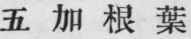




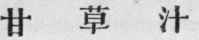


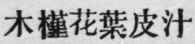
| Chi ma chi | Sesamum (juice). |
| Siao mai chi | Trtticum [ Wheat'] (juice). |
| Ta mai chi | Barley (juice). |
| Hei tow chi | Glycine hispid a (soja). Black bean (juice). |
- - | Lu tow chi | Phaseolus mun go (Kidney bean). Green bean (juice). |
| Pien tow chi | Dolichos lab lab (juice). |
| Ching mi chi | Rice (juice). |
| Lo mi chi | Glutinous Rice (juice). |
| Su mi chi | Setara Italica (juice). |
| Shu mi chi | Sorghum (juice). |
| Tse su ye chi | Perilla ocymoides (juice of leaves). |
| Po ho chi | Mentha juice (Peppermint). |
| Lai fu chi | Radish (juice) |
| Mei chi | Prune (juice). |
| Kan lan chi | Olive (juice.) |
| Tsao chi | Jujube juice (Zizyphus vulgaris). |
| Lung yen chi | Nephelium Longana (juice). |
| Shih chi | Persimmon (juice.) |
| Chu ping chi | Juice of orange cakes. |
| Ping lang chi | Betel-nut (juice) |
















Errata and Addenda
On Page 4. - Insert this omitted paragraph: -
In the Herbal, tea is found under the word ming It is there said that, in Shen Nung's Shih Clung
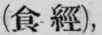 ch'a-ming
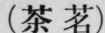 was first produced in I-chow
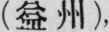 a city in Szechuan, in the time of the Five Dynasties, - the modern capital of that province, Ch'eng-tu Fu
On Page 6. - After boiling water, add - " or boiled water near the boiling point."
On Page 13. - For for, read far.
For thirty-five read thirty-six.
On Page 14. - Line 6, for proposed, read prepared.
By yellow millet is meant the grain called shu panicum miliaceum. The siau-mi
  small millet, is the setaria italica; and the tall millet, or kau-liang, is the holcus sorghum.
On Page 28. - For ligusticum dentilolum, read Ligusticum acutilobum. For Yetae, read Getae.
After Ch'iung-tse add: - On the frontiers of Szechuan and Thibet, it was introduced into China from the time of the Marquis Po Wang (that is the title by which Chang Ch'ien, the envoy to the Central Asian states, was ennobled); so the Ode says, etc., etc., etc.
On Page 36. - For aligno, read aliquo; and for misces, read mices.
On Page 38. - After tinctures add - "or liqueurs."
On Page 52. - For grape most, read grape must.
Continue to:


My Books

