


October - Third And Fourth Weeks. Flowers. Part 2
Description
This section is from the book "The Garden Week By Week Throughout The Year", by Walter P. Wright. Also available from Amazon: The Garden Week by Week Throughout the Year.
October - Third And Fourth Weeks. Flowers. Part 2
Crocuses
Crocuses are pretty in colonies, and as they are very cheap there is encouragement to plant them in quantity. They look very nice in broad stretches in grass, particularly the Golden Yellow, which is almost as cheerful as a break of sunshine on a winter day.
Crown Imperials
Crown Imperials-are well adapted for forming effective clumps in herbaceous borders, as they bear their flowers in a cluster on a tall stem, the brilliant blossoms hanging in a circle.
Daffodils
Daffodils are a great power. They are the large trumpet-shaped section of the Narcissi. They are beautiful as colonies in grass, in clumps in herbaceous borders, in beds, in pots, in vases - everywhere in fact. Bulb-growers tell us that Daffodils are advancing and Hyacinths declining in public favour. This may be partly due to the greater grace of the Daffodils, and partly to the fact that they increase more readily in British gardens. When they like the soil - and their tastes are pretty catholic - they form offsets freely, which Hyacinths do not do. We have already seen that home-grown Daffodils may be lifted and replanted in July or August. Bought bulbs should be planted in October or November, about double their own depth, in deep, fertile soil. When forming clumps, large or small, the bulbs which constitute each block may be put nine inches apart. Three strong plants in a triangle produce a better effect than half-a-dozen huddled together. The Chalice-flowered, or Star Narcissi, and the Poeticus are equally as beautiful as the larger Daffodils. The bulbs may be planted beneath turf, and will spear their way through quite readily at the end of winter. With respect to pot culture, the Bunch-flowered(Poly-anthus) Narcissi are most used, but the other classes are equally desirable. Generally three bulbs of the larger kinds may go in a 6-inch pot, and three of the smaller in a 5-inch. The Polyanthus varieties are generally potted singly. Three parts of loam, one of leaf mould, and some sand, all well mixed, suit admirably. The pots should be drained with crocks surfaced with flakes of leaf-mould, and the soil pressed firmly under and around the bulbs, but not made quite hard, otherwise the bulbs will be forced out when the roots start pushing downward. A few weeks under cocoa-nut fibre refuse or ashes will be an advantage, because root growth will push freely in advance of the tops, and that is desirable. Daffodils and Narcissi are so well adapted to cultivation in vases for room decoration that this phase of culture should be specially studied. The receptacles are not porous or drilled, so that no water can escape except by tilting the vases. This fact might be considered a disadvantage in one sense, as it would be regarded as likely that the material would become sour, but it does not. Peat-moss fibre is used instead of soil, and a little fine shell is mixed with it. The materials are supplied separately in appropriate proportions, and are mixed and watered. The fibre swells considerably when the water is added. The mixture is made fairly firm in the vases, but not quite hard. As with pot bulbs, the tips are left protruding. Plunging is not necessary. The vases ought to be examined once a week, to see that the fibre does not get quite dry. Moisture is essential to success. The following are a few good Narcissi of various classes:

Fig. 83. - Planting Daffodils in Grass.
a. Turf turned back, and bulb put in.
b. Bulb covered.
c. Soil filled in.
d. Positions for other bulbs to form clumps.

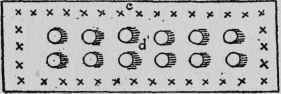

Fig. 84. - Planting Bulbs in the Garden.
a. Large kinds planted in groups in herbaceous borders.
b. Small kinds planted in groups near the front.
c. Small kinds planted in lines round a border.
d. Large kinds planted in centre of a border. e,f,g, A, i. - Various depths for planting the smallest and largest kinds of bulbs.

Fig. 85. - Bulbs in Vases of Fibre.
a. Lumps of charcoal.
b. Bulbs.
c. Vase filled with fibre and bulbs planted.
Yellow Trumpets
* Emperor Glory of Leyden.
*Golden Spur.
Johnstoni Queen of Spain.
Yellow Trumpets *Obvallaris (Tenby Daffodil) Van Waveren's Giant.
Double Chalice-flowered Orange Phoenix Silver Phoenix.
White Trumpets Cernuus
Madame de Graaff *Pallidus Praecox.
Poeticus.
Almira.
*Ornatus (early) *Plenus (double).
Polyanthus.
Grand Monarque Paper White (early).
Soleil d'Or.
White And Yellow Trumpets
* Empress *Horsefieldii.
Mrs. Walter Ware Victoria.
Double Trumpets
Capax Plenus.
*Telamonius Plenus (Van Sion).
Single Chalice-Flowered
*Barri Conspicuus Duchess of Westminster.
*Sir Watkin Stella Superba.
* These are cheap varieties that may be planted in quantity.
Continue to:


My Books

