


Cephalanthus
Description
This section is from the book "The Standard Cyclopedia Of Horticulture Vol2", by L. H. Bailey. See also: Western Garden Book: More than 8,000 Plants - The Right Plants for Your Climate - Tips from Western Garden Experts.
Cephalanthus
(Greek, head and flower; flowers in heads). Rubiacese. Button-Bush. Bush grown for its attractive white flower-heads appearing in summer.
Shrubs with opposite or whorled entire stipulate leaves: flowers small, tubular, white or yellowish, 4-merous, with included stamens and long exserted style, in globular heads; ovary 2-celled: fruit dry, separating into
2 Nutlets
Five species in Amer. and Asia, of which only the one N. American species is cult: hardy ornamental shrub, with handsome glossy foliage and very attractive with its flower-balls appearing late in summer. It thrives in any good garden soil, best in a sandy, somewhat moist one; naturally it grows in swamps and on the borders of streams and ponds, often with the stems partly submerged. Prop, by seeds or by cuttings of ripened wood in fall, and also by greenwood cuttings taken from forced plants early in spring.
Occidentalis
Linn. Fig. 874. Shrub, 3-12 ft., sometimes tree-like: leaves long-petioled, ovate or oval, acuminate, glossy above, glabrous or slightly pubescent below, 3-6 in. long: heads about 1 in. diam., long-peduncled, 3 or more at the end of the branches. July-Sept. From New Brunswick south, west to Ont. and Calif. Em. 394. R.H. 1889, p. 280. S.S. 14:711. variety angusti-folia, Andro. Leaves oblong-lanceolate, usually in 3's. R.H. 1889, p. 281.
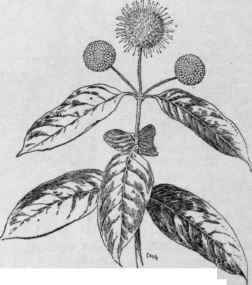
Fig. 874. Cephalanthus occidentalis. (X 1/3)
C. natalinsis, Oliv. Branchlets hairy: leaves ovate, acuminate, 1 in. long: flowers green, in solitary heads: fruit edible. S. Africa B.M.
7400' Alfred Rehder.
Continue to:


My Books

