


Some French Orchid Holders
Description
This section is from the book "The American Garden Vol. XI", by L. H. Bailey. Also available from Amazon: American Horticultural Society A to Z Encyclopedia of Garden Plants.
Some French Orchid Holders
The unsightly shapes of the receptacles that orchids are commonly grown in with us, have long been an irritation to flower lovers with aesthetic tastes and have perhaps been an unconscious cause of the little interest felt in these plants by many worshippers of the floral kingdom. The use of baskets of pitch pine has long been general and meets the hearty approval of raisers. We give a number of pictures repro-duced from Le Moniteur d' Horticul-eur, showing shapes and construction of some now made and sold in France. The most common and ugliest form is the square bottomed basket (Fig. 1), seen in all parts of the world, and used for growing den-drobiums, cattleyas, most of the oncidiums, etc. A similar basket, or panier as the French call them, of twice the usual height, they especially recommend as suitable for the Indian orchids, such as aerides, saccolabium, vanda and angraecum. For phalaenopsis, the high tubular or cylindrical form (Fig. 2)is considered the best. For those who are willing to incur a little extra trouble or expense, they recommend the single (Fig. 3) or double octagonal forms which are especially adapted for strong specimen plants.
For stanhopea and acineta, an especial shape is made (Fig 4), with a bottom of copper wire through which the flower shoots can find ready egress. The hamper form (Fig. 5) and the log form (Fig. 6) are said to be better than the heavy logs or pieces of bark on which the Brazilian oncid-iums, cattleyas and laelias of spreading form are grown. The hopper form (Fig. 7) and the manger form (Fig. 8) are especially useful for the decoration of walls, and ornamental foliaged plants of fern-like or trailing habit are mingled with the orchids in the happiest manner. These paniers are found admirably adapted to the culture of bromeliads of small size, many ferns such as adian-tums, certain polypodiums davallias, and the selaginellas. They can be made the most pleasing additions to greenhouse and conservatory, the upper parts of which are often bare of vegetation. The pot (Fig. 9), cup and conical forms (Fig. 10) are less to be recommended, as they render the cultivation and arrangement of the plants more difficult. The cubiform (Fig. 11) is adapted to those specimens of large size and strong growth that stand upon the floor, only requiring to be raised on the short legs, or it can be made in small sizes if any one has a fancy for it.
All of these can be bought in France, but we know of no dealer in florist's supplies who keeps them all in this country; however, they can readily be constructed. Do not make the mistake of oiling or varnishing them, as is sometimes done, as then the surfaces are rendered unsuitable for the plants to attach themselves, and are detrimental to their well-being. Teak wood is recommended by foreign authorities as most desirable for use in constructing orchid holders, but it would be difficult and expensive to get it in this country. While it is desirable to have wood that does not decay readily, it seems to make little difference to the plants. Oak, cork, pottery, the trunks of tree ferns, etc., have all been most successfully employed, as convenience dictated. The ordinary clay pots, subject however to some variation in shape, are now the most common among our orchid raisers, and from a cultural point of view are unobjectionable, but their appearance is then so similar to plants that live in the earth that one of their chief distinctions is lost to the orchids.
Nature adapts them so beautifully to their natural surroundings that few people realize that their odd rather than beautiful appearance is owing to our way of looking at them in badly placed positions; experience will give us better knowledge.
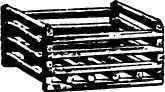
Fig. 1.
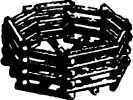
Fig. 3.
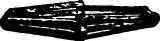
Fig. 5.
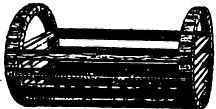
Fig. 6.
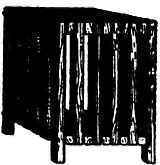
Fig. 11.
Continue to:


My Books

