


Chapter XII. Cold Fancy Sweets
Description
This section is from the book "Larger Cookery Book Of Extra Recipes", by Mrs A. B. Marshall. Also available from Amazon: Mrs A.B. Marshall's Larger cookery book of extra recipes.
Chapter XII. Cold Fancy Sweets
Spun Sugar
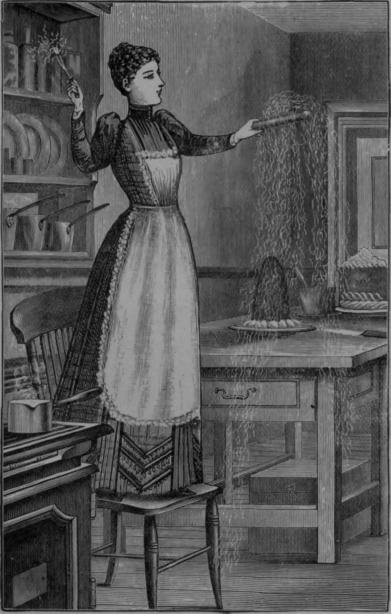
Put half a pound of water and one pound of best cane loaf-sugar in a perfectly clean copper sugar-boiler or thick stewpan; cover the Spinning Sugar pan over, bring to the boil, remove any scum as it rises from time to time, and continue boiling until the liquid forms a thick bubbled appearance (commonly called the crack); then take a small portion on a clean knife or spoon (or the finger may be used, but must be well wetted with cold water and used very quickly), and plunge it immediately into cold water, and if it is then quite brittle and leaves the knife or spoon or finger quite clear it is ready for spinning. If it clings or is at all soft or pliable, continue the boiling until as above. When ready take a small portion on a fork or spoon, and rapidly throw it to and fro over a slightly oiled rolling-pin; continue until sufficient threads of sugar are obtained.
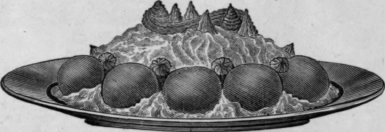
Apricot Meringues Meringues D'abricots
Take half a pound of finely sifted castor sugar, and mix with it a teaspoonful of Marshall's Apricot Yellow and a saltspoonful of Vanilla essence; rub it well together and allow it to thoroughly dry. Put in a whipping-tin four large fresh whites of egg and a pinch of salt, whip them quite stiff, then add the prepared sugar by degrees, taking care not to stir the mixture more than possible after adding the sugar. Take a hot baking-tin, rub it all over with white wax, then leave it till cold; put the meringue mixture into a forcing bag with a plain pipe and force it out on to the tin in portions of about the size of apricots, dust them over with castor sugar, and put into a moderate oven till quite dry and crisp on the top, but the under side should be somewhat soft; then take them from the tin, and by means of an egg work a little well in the bottom of each, holding the top of the meringue in the hand; return them to the tin and place them in the oven (care must be taken that the meringues are not hurried in the cooking or they will lose their colour); when quite dry remove from the tin and set aside till cold, then place in each of the little wells a small round of cooked apricot; place another meringue on the top of this, mask them over with Maraschino glace (vol. i.) coloured with a little apricot yellow, and dish up round a pile of stiffly-whipped cream sweetened and flavoured with vanilla; serve as a dinner or luncheon sweet, or for any cold collation. These meringues can be kept ready for use if put in a dry place.
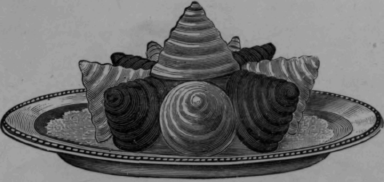
American Meringues - Meringues A L' Americaine
Prepare an almond icing (vol. i. page 41) and form it into little cone shapes; place these on lightly waxed cool baking-tins, then mask over with the meringue mixture (as below), using two separate forcing bags and plain pipes for the purpose, and making them in two colours; dust over the meringues with icing sugar and place them in the oven, which must be of very moderate heat, for about one and a half to two hours, when they should be quite dry and a pretty pale colour; put them aside till cold, then glaze over with Maraschino or Noyean glace (vol. i.), one in red, one in white or brown colours, as liked; let them dry again on a pastry rack, and then dish up on a dish-paper or napkin, and serve for a dinner or luncheon sweet or for any cold collation, or they can be served for dessert. They also form a nice sweet without the glace, being then served with whipped cream.
Continue to:


My Books

