


W0men Workers In The Church
Description
This section is from "Every Woman's Encyclopaedia". Also available from Amazon: Every Woman's Encyclopaedia.
W0men Workers In The Church
Every church has its own discipline in regard to woman's work in it and for it. The conditions under which a woman's work would be accepted, and the sphere assigned to her, would not be the same in all churches. But all churches, subject to their own interior discipline, welcome the work of women.
This is no other than the nature of the case demands. Christian Churches stand upon the acknowledged basis of belief in the Fatherhood of God and the brotherhood of mankind in Christ. A church cannot just barely maintain this as an academic proposition. It is. constrained to apply it, to consider the needs of "all estates of men" in Christ's Church, and to try to put the principle of religion into practice. Women's service in the Church may be divided into paid and professional work, or unpaid and amateur work.
The terms are used without prejudice . They are simply designations of facts, and do not carry any valuation. The value of the work done is measured by its quality and not by its remuneration. The Church opens a large field of employment to the paid worker. Sisterhoods are found in every branch of the Christian communion - they imply a common dwelling-place for women and a rule of life. The vows may be of lifelong obligation or for a set period. Maintenance is guaranteed. The work is done with the sanction of the church to which the Sisterhood belongs. The Sisters are engaged in the care of the sick, the recovery of fallen women, the education of the young in its elementary. and higher stages, the general care of the poor or of particular classes who need special help. Conventual life is not always maintained. Workers are detached at times from the communal centre for special service in connection with some particular church which employs them in its own work. Deaconesses and kindred groups of women, while they have a common training-place and headquarters in a particular institution, are attached to a given religious organisation for longer or shorter terms, and spend their lives here or there as they are appointed, doing the same sort of work as Sisters do at the direction of the mission or church which employs them and pays them. Most British and Colonial dioceses have bodies of this kind attached to them.
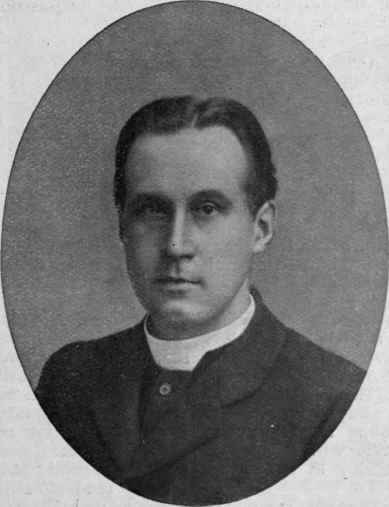
The Rev. Canon R. T. Talbot, D.d. F. Russell & Sons '
The Salvation Army, the Church Army, and some other bodies use women largely in their religious and social work, and train them and put them in the way of maintenance.
In addition to this, nearly all religious organisations employ the paid service of nurses, parish visitors, or Bible women. There are also homes, refuges, and creches (usually in connection with a religious body), where women serve in various capacities, and are paid for their work.
The pay is small and the work hard, but when a woman has the indispensable vocation no life could be more happy and more useful.
But the tale of woman's work in the Church is by no means exhausted. Every section of the Christian Church makes ample use of female ministry rendered voluntarily. Inside the Church women can and do act as churchwardens, as sacristans, and are often engaged in the instrumental and choral music. We shall in the remainder of this article describe in further detail what the amateur can do.
Such a person may find herself living in or near some centre of population. Here and there will be various churches with one or more paid workers, clerical or lay, who are called upon to minister to the varied needs of perhaps several thousands of men and women and children. Work of all sorts is required; but little more can be done than just to teach the principles of life to the few who come to church, and to do a little practical application. The fight is very unequal. On the one side, ignorance and apathy and vice are, it may be, firmly entrenched and established; on the other side are one or two officers of Christ's Church, but they have no standing and little following. There is no money to spend. The clergyman's function as a teacher, inspirer, organiser, is lost in the gulf of overwhelming drudgery. But at the last hour of need some women in the neighbourhood come to the rescue, and help to restore the lost ideal of a church.
One, maybe, is a girl of eighteen, just home from school. She wants to justify her education, she wants to have "a good time"; but also she would like to do "some good." She goes to the clergyman, or to his wife, perhaps, and, while confessing how little she knows, asks to be given something to do.
A young, inexperienced girl cannot be launched into the deep waters of social work, but there is not a little which she can safely do. It might work out like this. She will be introduced to a group of girls who are just past school age, a meeting-place will be provided, and two or three evenings a week our young amateur can both teach and learn. She will form the nucleus of what may develop in time into a girls' club.
Or take the case of a mother who is willing to make some time and use it in connection with a church by getting into friendly touch with those who, like her, are mothers, but who have few opportunities and privileges.
How gladly the church will welcome her and provide her with all that is required, so that she can form a fellowship with other women on the basis of the common interest of motherhood. If it is true, as it certainly is, that a mother's influence counts for so much in the family life, just consider what a door of opportunity is opened in this way. Given a tactful, gracious woman, what encouragement she can give to women who only want encouragement to rise to great responsibilities, the claim of which would never have been realised but for her!
Here is another sphere of woman's work. Supposing twenty women are in touch with twenty families - here are nearly 2,000 souls linked up with the Church who otherwise would have been sheep without a shepherd. In this way the Church becomes a living reality in the district, and the throb of life is felt in the before-time inanimate parish. Or, again, there are the Sunday-schools, ranging from infants through every grade up to the adult Bible-classes; there are Bands of Hope, guilds, classes, and so on. Well, in every single instance there is work waiting to be done which some woman or girl can do - without a great expenditure of time - work by which she can create or continue extraordinary influence over the opening lives of young human beings.
There will be women who want to help the Church who cannot leave their home, but for such there are many opportunities within the homes. A working party can be organised to clothe those who need clothing, or to provide for an annual sale, the proceeds of which can be devoted to church work. Every parish will also afford facilities for those who do not feel called to work which is of a religious or ethical character.
Physical drill, nursing classes, ambulance classes, swimming classes, dramatic entertainments, concerts, savings banks, friendly visits to the sick or infirm, are just hints of the very varied shapes of service which a church needs and welcomes.
How can a start be made ? Well, the simplest thing is to go to someone in charge of some church, settlement, or mission, and say: "Give me something which 1 can do." The rest will follow. And when you are engaged in some piece of work remember two things: (1) Work with as much care and fidelity as if you were paid for it, and work not in the spirit of patronage, but of loving service; (2) you and others are together working to fill up with detailed service the large outline of the otherwise unfulfilled possibilities of the Church in a given area. The measure of the welfare of the whole parish or district depends upon the loyal co-operation of all concerned. There must be one desire - the desire to secure the good of all by the unselfish service rendered by each worker. There must be as little room for self-praise as for petty rivalry.
Continue to:


My Books

