


Daily Duties Of The House-Mother. Feeding The Family. Part 5
Description
This section is from the book "Warne's Model Housekeeper", by Ross Murray. See also: Larousse Gastronomique.
Daily Duties Of The House-Mother. Feeding The Family. Part 5
On The Table
Lobster cutlets. Fish cakes. Kippered salmon. Shrimp toast. Kidneys stewed in wine. Kidneys broiled. Devilled kidneys. Poached eggs with cream. Rumbled eggs. Tomatoes and eggs. Birds' nests. Egg toast. Ham toast. Anchovy cutlets. Poached eggs a la Victoria (with truffles).
Kegeree.
Omelet.
Scalloped veal.
Broiled partridge.
Broiled pheasant.
Salmi of game.
Broiled mushrooms.
Devilled legs of turkey or chicken. Eggs a la bonne femme. Oysters in ham (huitres au lit). Brawn.
Oyster loaves. Oyster etiquette.*
On The Sideboard
Ham - Cold Beef - Boiled or cold roast Pork - Cold Fowl or Turkey - Tongue - Cold Mutton or Lamb.
Luncheon
The word lunch or luncheon literally means a slice of bread. It was added when dinners became late, and since that meal has long passed the biipper hour of our ancestors, luncheon has become a substantial meal, in fact an early dinner, at which the children of the upper classes usually dine.
Our ancestors were content with dinner and supper only; but probably quite as much food was consumed at the two meals as is consumed at present.
* Recipes for these dishes will be found in this work under proper headings, or in "Warne's Model Cookery".
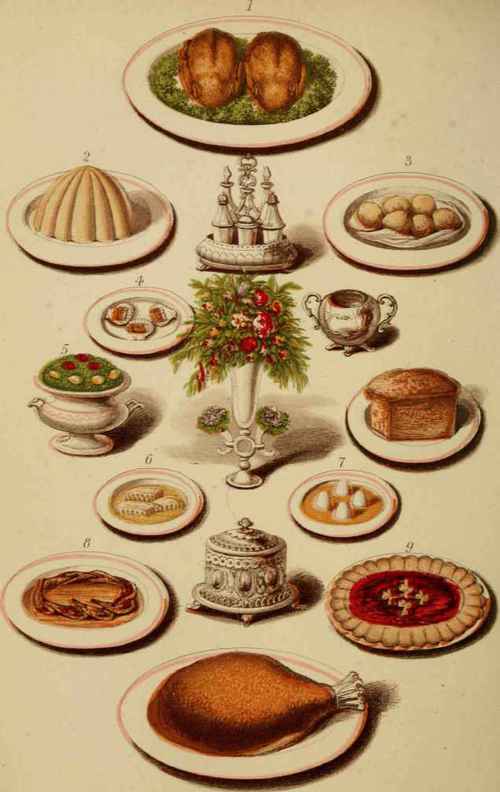
1. Cold Chickens.
3. Potatoes.
4. Scalloped Veal.
5. Salad.
6. Honeycomb.
7. Curied Eggs.
8. Cutlets.
9. Jam Tart.
How To Lay A Luncheon
It is possible that some amongst our readers may find the accompanying plate of a laid luncheon useful, to show to inexperienced servants as a specimen of what the table should look like.
They need only add the information that s?nall knives and forks are laid for luncheon; that caraffes of water should stand at the four corners of the table, with spoons, salt-cellars, etc. as for dinner; and that no table napkins are required. The servants hand the plates of whatever is eaten once round and then leave the room; no further waiting (unless for a grand luncheon party) being required.
Continue to:


My Books

