


History Of The Harris Organization
Description
This section is from the "Why Bonds Are Safe Investments" book, by Harris Trust & Savings Bank. Also see Amazon: Why Bonds Are Safe Investments.
History Of The Harris Organization
The Harris bond and banking organization, consisting of the Harris Trust & Savings Bank of Chicago; Harris, Forbes & Company of New York; Harris, Forbes & Company, Inc., Boston, and the Harris Safe Deposit Company of Chicago, whose combined resources on January 1, 1920, were approximately $ 75,000,000, was founded in 1882 by Norman Wait Harris. Mr. Harris had been secretary and manager of the Union Central Life Insurance Company, and in purchasing investments for that company had learned that the old-fashioned bond brokers did not always obtain complete knowledge of the securities which they offered for sale - the reason being that the brokers' usual commissions were not sufficient to justify all of the expenses necessary to investigate fully the details of a security. He had also come to the conclusion that municipal bonds were among the soundest investments that anyone could obtain. So in founding the house of N. W. Harris & Company in Chicago in 1882 he decided to specialize in municipal bonds and not to sell any bonds on commission but to buy them outright.
Mr. Harris also decided, as a basis of his business policy, to make a thorough examination of the security back of every bond, its legality, the value of the taxable property of the issuing Municipality, etc. Later, when Mr. Harris and his associates foresaw the large development in Railroad, Public Service and other sound and well managed corporations together with the increasing stability of their securities, the scope of the business was enlarged to include bonds of this character. Here again was laid down the policy of thoroughly examining the security back of each issue, including not only the relation of the physical value of the property and the amount of bonds outstanding, but also the character of the corporation's management and its future prospects. For this work only disinterested experts of the highest character and ability are employed.
The policy of recommending only bonds which have been thoroughly investigated has been maintained through the entire life of the Harris Organization. As a natural consequence this organization has declined to handle, after investigation, many securities which have since proved good, although at the time of investigation they seemed to be insufficiently safeguarded. The Harris Organization prefers to make its mistakes on the side of declining securities which turn out to be properly safeguarded rather than of purchasing those which may turn out to be insecure.
The success of this policy is evidenced by the fact that during its thirty-eight years of existence the Harris Organization has served over 5,500 banks, bankers and trust companies in connection with their bond investments. In other words, it has acted in the capacity of special expert in choosing bonds for men already financial experts themselves. In this period the Harris Organization has purchased with its own funds more than three billion, five hundred million dollars ($3,500,000,000) worth of bonds and notes which have proved safe investments for its customers.
Mr. Albert W. Harris, the present head of the Harris Trust & Savings Bank, not only has followed the general policies laid down by his father, but during his active connection with the institution of over a quarter of a century has had a large share in determining those policies. Mr. Harris entered the business in 1888, six years after the founding of N. W. Harris & Company. In 1896 he was made a member of the firm, and when the Harris Trust & Savings Bank was organized in 1907, was elected Vice President. Six years later he was elected President. All other executive officers have been connected with the institution for twenty or more years.
Harris, Forbes & Company, New York and Boston (formerly N. W. Harris & Co.), handle the bond business in the eastern territory. There is no direct financial connection between the Harris Trust & Savings Bank and Harris, Forbes & Company. The two houses, however, sell bonds from a common list and have the benefit of the combined experience of the executives of both organizations. Mr. Allen B. Forbes, President of Harris, Forbes & Company, was connected for many years with the Chicago office of N. W. Harris & Co.
The present management of the Harris Organization has followed the policies laid down by the founder of the business, and it is gratifying to note that the bond sales for the year ended June 30, 1920, were by far the largest in the history of the organization - over three times what they were ten years ago.
The Harris Organization is glad at any time to place its experience and facilities at the disposal of any prospective investor. This will put the investor under no obligation whatever, and the organization is just as glad to talk over an investment of a few hundred dollars as one of many thousands.
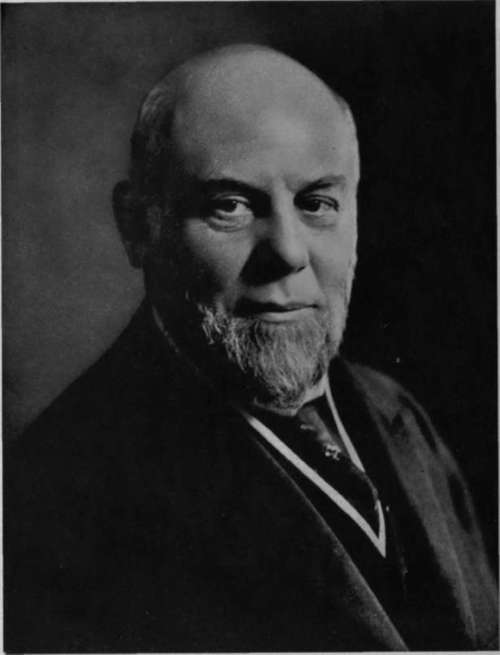
N. W. Harris - Founder of the Harris Organization.
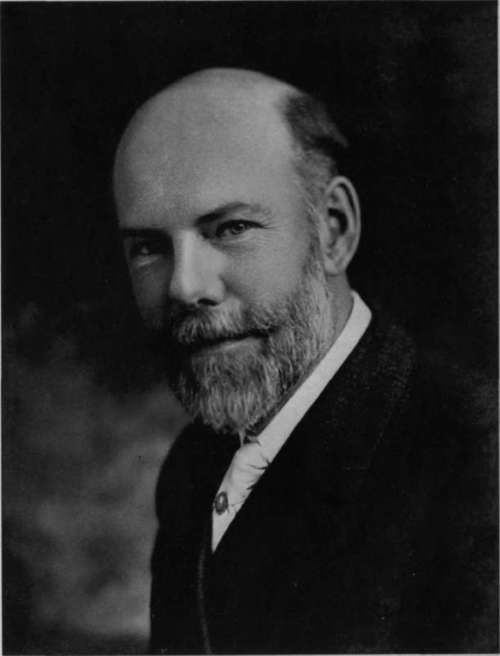
Albert W. Harris - President Harris Trust & Savings Bank.
Bond Department - Harris Trust & Savings Bank
Organized as N. W. Harris & Co. 1882. Incorporated 1907
Harris Trust Building, Chicago.
Harris, Forbes & Co. Pine Street, Corner William New York.
Harris, Forbes & Co. Incorporated, 35 Federal Street Boston.
Harris, Forbes & Co. 27 Austin Friars, E. C. London.
Representatives Of Bond Department Of Harris Trust & Savings Bank, Chicago
St. Louis, Missouri
504 La Salle Building, Minneapolis, Minnesota.
801 First National Soo Line Building, Milwaukee, Wisconsin.
700-702 First National Bank Building, Louisville, Kentucky.
34 U. S. Trust Building, San Francisco, California.
504 Insurance Exchange, Detroit, Michigan.
38 Congress Street, West Penobscot Building.
St. Paul, Minnesota.
400 Guardian Life Building, Kansas City, Missouri.
1006 Scarrit Building, Los Angeles, California.
1029 Van Nuys Building.
Correspondent Offices Of Harris, Forbes & Co., New York
Philadelphia, Pennsylvania Widener Building.
Cleveland, Ohio.
Union Commerce Bank Building, Cincinnati, Ohio.
2405 Union Central Building. Rochester, New York.
Wilder Building, Albany, New York.
13 North Pearl Street Harrisburg, Pennsylvania.
Kunkel Building, Hartford, Connecticut.
36 Pearl Street, Pittsburg, Pennsylvania.
Commonwealth Building Buffalo, New York.
Ellicott Square, Baltimore, Maryland.
211 East Redwood Street Syracuse, New York.
White Memorial Building, Troy, New York.
11 State Street, Wilkes-Barre, Pennsylvania.
Second National Bank Building Washington, District of Columbia.
603 Hibbs Building.
Correspondent Offices Of Harris, Forbes & Co.,Inc., Boston
Springfield, Massachusetts.
Third National Bank Building, Toronto, Canada.
King and Yonge Streets C. P. R. Building, Montreal, Canada.
21 St. John Street.
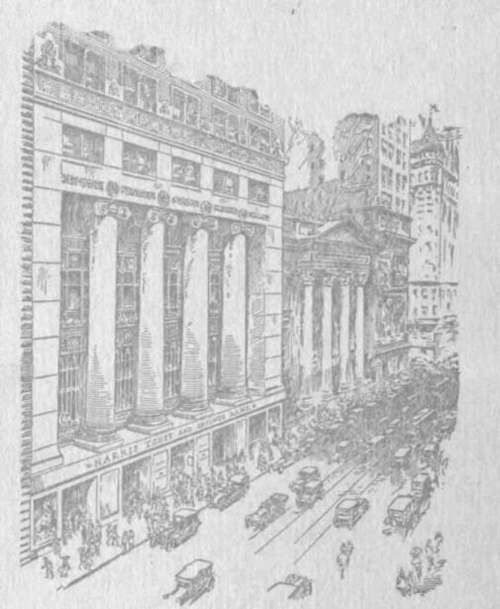
"Your Personal Bank".
Continue to:


My Books

