


Method Of Panelling With Veneers
Description
This section is from the book "Cassell's Cyclopaedia Of Mechanics", by Paul N. Hasluck. Also available from Amazon: Cassell's Cyclopaedia Of Mechanics.
Method Of Panelling With Veneers
Wood panelling, although a very suitable and much-used enrichment, is generally very costly. The following is a strong and effective method of fitting it at a greatly reduced cost. First cut some oak veneer into sheets about 2in. longer each way than the required panels. Mark the lines of the framing on the wall, and glue these sheets to the plaster, overlapping the marks 1 in. all round. The wall having been previously plugged, fasten to it pieces of oak, each about 4 in. by 5/8 in., to form the framing, which thus holds the veneer. The joints between the rails and:-tiles are merely butted.
Sham pins, either cut off flush or left projecting for 1/2in... may be added if desired. Fig. 1 shows an elevation of panelling with an old-fashioned treatment of the mouldings, consisting of a double fillet and chamfer run on the upright members only, and butting on the horizontal ones, which are left square. Fig. 2 is a section illustrating the new method of tixing the framing. The panelling is solid, leaves no space to harbour vermin, an I can be polished, stained, or otherwise finished in the same manuer as ordinary panelling, while its cost is considerably less than one-third that of the latter. A further advantage is that, as it is much thinner than ordinary work, the skirting, if already fixed, need not be taken up and brought forward; for with suitable mouldings on the bottom edge of the bottom rail of the panelling a neat junction may be effe ted. Fig.3 shows a method, of treating mouldings for this purpose, while Fig. i is an enlarged detail section on the line A B in Fig. 1. In Figs 3 and i, A represents the framing, Bthe plaster, C the ground, and D the veneer. If a bolection moulding is preferred, it should be remembered when designing it that the general character of a moulding arises from the contrast of curves wit h sharp edges: and, at the same time, the chief divisions of the mouldings should not be equal in size, as this tends to produce a coarse effect. Two or three small delicate mouldings, followed perhaps by a bold ovolo or scotia, and then by smaller mouldings again, should, if properly managed, give that idea of richness which mouldings are intended to convey. It may be noted that oak-wood panelling is, as a rule, better left rough from the scraper, and, except when it is to be polished, not touched with the glass paper, as this clogs up the grain.
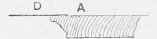
Fig. 4.
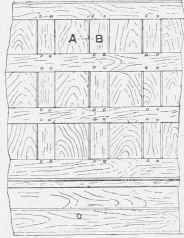
Fig. I.

Fig. 2.
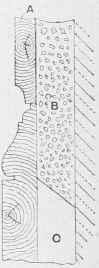
Fig. 3. Method of Wood Panelling with Veneers.
Continue to:


My Books

