


Nails
Description
This section is from the book "The Horse - Its Treatment In Health And Disease", by J. Wortley Axe. Also available from Amazon: The Horse. Its Treatment In Health And Disease.
Nails
Lameness may be caused by a nail being driven too near the sensitive foot without absolute penetration of the "quick". This cause of lameness is called "a bind", and may not be evident for a day or two, or even a week, after the time of shoeing. In every lameness of the horse which cannot be accounted for by a visible lesion the foot should be examined, and especially when it is noticed within a few days of shoeing. To detect a foot-lameness the shoe must be removed and the hoof tested all over by firmly pressing it with pincers. When a "bind" is detected before lameness is very acute, removal of the offending nail, rest, and warm fomentation are sufficient to prevent further injury. When a "bind" is allowed to continue, inflammation is set up in the foot, and pus may form. Then a serious condition exists which requires veterinary attendance. Another form of injury results from a nail being driven directly into the sensitive foot. This is usually followed by immediate lameness, but its gravity depends upon the extent of injury, and upon whether the nail carries with it any dirt or septic material. As a rule the farrier knows when he has "stabbed" or "pricked" a horse, and withdraws the offending nail at once. If suppuration does not follow a prick its effects are very temporary, but the formation of matter within the hoof leads to very grave results, in some cases to a fatal termination. Continued work is the greatest aggravation of injuries caused by nails, and therefore all such cases should be attended to at once, and rest strictly enforced.
Clips may cause lameness by being hammered down too tightly. The most serious injury traceable to clips occurs from a shoe becoming loose and only partially detached from the foot, so as to permit a horse to tread on the clip. A large punctured wound results, which may endanger the animal's life. Rest and perfect cleanliness are essential to recovery.
Uneven Pressure of the Shoe causes the sensitive foot to become bruised. The sole of a flat foot is frequently bruised by pressure of the shoe just behind the toe. When detected early enough removal of pressure is all that is necessary. The most common seat of injury, due to bruising by the shoe, is the inner heel of the fore foot. This is known as a "corn", but is in no way analogous to the condition on human feet described by the same word. A "corn" in the horse is simply a bruise of the sensitive foot resulting from uneven pressure by the heel of the shoe. The injury causes lameness, and is accompanied by staining of the horn by effused blood underneath. An open, flat foot is most liable to corn, and the shoe most likely to cause it is one that is fitted too short and too close. Even a well-fitted shoe may cause a corn when it is allowed to remain on the foot too long. As the hoof grows the shoe is carried forward, and the extremity of the iron is shifted from its safe bearing on the wall to a position which allows it to impinge on the seat of the corn. The excessive retention of shoes frequently leads to their being forced outwards, and then the inner heel is brought over the sole on the inside, and bruising results.
The gravity of a corn depends upon the sensitive sole. In slight cases removal of the shoe and its readjustment, so that no pressure on the bruised part can occur, is sufficient to ensure a return of soundness. Sometimes a day or two's rest and warm fomentation of the foot are necessary. In more aggravated cases it is right to suspect the formation of matter at the bruised part, and as this is a serious condition within the hoof, it is necessary to pare away all the discoloured horn, and thus afford an opening-through which matter may escape. In cases of corn where the discoloration of horn is not very great, and where lameness is not excessive, it is inadvisable to cut away all the horn over the bruised part. Horn takes time to grow again, and its absence spoils the bearing surface of the foot. In very many cases a simple bruise, that would have recovered in a few days by merely relieving the pressure of the shoe, is made a source of injury and of recurrent lameness by the unnecessary removal of all the horn between the wall and the bar. When a slight corn is found with slight lameness, relief of pressure is easily given by cutting off the inner heel of the shoe, thus forming what is called a three-quarter shoe. This removal of iron is a safer and better plan than removal of horn.
Uneven pressure by a shoe may take place at other parts of the hoof. A badly - fitted shoe very frequently bears disproportionately on the quarters, and the wall becomes weak and broken. In such a case relief is given either by lowering the wall or by adjusting the shoe so that heels and toes for a time afford the only bearing.
In all cases where a separation exists between the sole and wall, bearing must be avoided, as the wall, when unsupported by a firmlyconnected sole, is unable to sustain its share of weight. In cases of "seedy-toe" this must be remembered. Where a "sand-crack" exists, pressure should be removed from the wall. If the sand-crack be at the toe a good plan is to draw two clips on the shoe, one on each side of the crack, and then to lower the wall between the clips so that it has no contact with the shoe. With a sand-crack at the toe the heels should be kept low and no calkins used, as the higher the heel is raised the more pressure is thrown upon the front portion of the foot. When a crack exists at the quarters the wall just under the crack must be removed from bearing, but it is of the greatest importance that the heel of the shoe should have close contact with its horn behind the crack.

Fig. 648. - Three-quarter Shoe.


Fig. 649. - Sand Crack, showing Method of Paring the Crust a, Bearing relieved at wrong place by "springing" the heel. b. Horn removed to prevent pressure.
"Cutting" or "Interfering" are the terms applied to the act of striking the fetlock of one limb with the shoe of the opposite limb. Every horse-owner imagines such an accident to be the fault of the farrier, and every farrier fancies he has a system of preventing or curing such injury. I must, of course, allow that the shoe inflicts the blow, but I am quite convinced it is a passive agent, and that in 95 per cent of cases no fault of the shoe, either in form or fit, can be shown to have occasioned the injury. " Cutting" is practically confined to young horses out of condition, or to old horses suffering from debility. It may also take place in tired horses. Of course, a shoe excessively prominent on its inside will facilitate injury to the opposite fetlock, and it is therefore right to fit the shoe close with a view to prevent or cure cutting. It is not right, however, in any case to rasp away the whole of the wall on the inside toe, and such a proceeding never yet stopped a horse from cutting. It requires about two months to get a green horse sufflciently into condition to stop him hitting his legs. During this time he should wear pads or " Yorkshire boots". His shoes may be fitted close, but the wall of his foot should not be damaged. As he gets into condition he will cease striking his fetlocks, and whatever curious form of shoe he happens to wear when he begins to go strong and cleanly will get the credit of a cure, although it had nothing to do with the change.

Fig. 650. - Shoe for Cutting, showing Position on the Foot.
The hind fetlocks suffer more from cutting than the fore. This is due to the different form of shoe used quite as much as to the form and action of the limb. The hind shoe has calkins which interfere with the proper relative position of the foot to the limb, and so cause imperfection in the gait. Nothing so speedily stops cutting behind as removal of calkins and the use of a level shoe. It is not the calkin that hits the opposite fetlock. In very few cases is the heel of a shoe the offending part. It is the inside toe which strikes, and this proves that the injury results from defective action and not from prominence of the shoe.

Fig. 651. - Shoes for Cutting.
It has been found that a three-quarter shoe does good in cutting. It does so, not because the heel was the offending part, but because the movement of the foot is modified by the altered form of the shoe. The practice of raising one side of the foot higher than the other for the prevention of cutting is very widely adopted, and plausible theories are framed as to its effects. Sometimes it is argued that the injured fetlock is thrown farther outwards, and sometimes that the offending foot is made to move farther away from the opposite leg. The practice is not always successful, and the theory wants a true basis of facts. Not one horse in a thousand "cuts" when in good condition, and nearly every horse does when out of condition. Patience, good feeding, and regular work are better treatment for cutting than all the usual alterations of foot and shoe.
Over-reach is an injury to the heel of a front foot by the shoe of the hind foot of the same side. It is not the outer edge of the hind shoe which strikes, it is the edge on the inner circumference of the toe of the shoe. To prevent over-reaching, the hind shoe must be so altered that the offending part is rounded off. As the accident only occurs during the fastest paces it is confined to hunters and trotters, two classes of horses which ought always to be shod with hind shoes having rounded edges on their inner toe circumference.
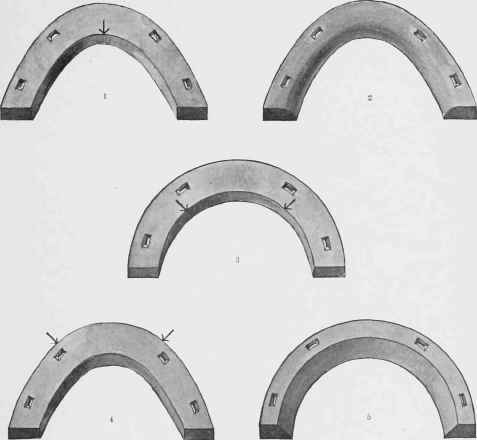
Fig. 652. - Over-reaching, Forging, and Clacking.
1, Toe of hind shoe, showing the edge which cuts the heel of fore foot. 2, Toe of hind shoe, showing rounded inside border. 3, Toe of fore shoe, showing places struck in forging. 4, Toe of hind shoe, showing the edge which strikes the fore shoe. 5, Toe of hind shoe with inner border bevelled off.
Clacking, or Forging, is the noise made by horses trotting when the hind shoe strikes the fore. It is not the heel of the front shoe that is struck, but the surface of the shoe just behind the toe, so that the foot is in the air at the time of striking. The part of the hind shoe that strikes is not the extreme point of the toe, but the edge on either side of the toe. Young horses out of condition, and long - stepping, careless goers, are usually the animals that "forge". To prevent it the front shoe is made concave on the ground surface, and the calkins may be removed from the hind shoes. Quite as important as alteration of the shoe is alteration of the horse's gait. He should not be driven " past his pace", and he should be made to go up to his bit. Patience, condition, and coachmanship are as necessary to stop "clacking" as a good farrier.
Continue to:


My Books

