


Changes In The Form Of The Teeth From Wear
Description
This section is from the book "The Horse - Its Treatment In Health And Disease", by J. Wortley Axe. Also available from Amazon: The Horse. Its Treatment In Health And Disease.
Changes In The Form Of The Teeth From Wear
It is customary in examining the mouth of the horse, after the animal has reached the age of five years, to devote special and sometimes exclusive attention to the state of the corner incisors. In cases, however, where an exact opinion is important, the state of the other incisor teeth deserves consideration.
Between five and six years the anterior edge of the corner tooth necessarily undergoes wear, which finally extends along the whole front of the tooth, so that at the completion of the sixth year the incisor has lost its shell-like character; the posterior edge, however, still retains its rounded appearance. These characters are shown in the next illustration (fig. 614).
At seven years of age the whole of the incisor teeth have assumed a more solid character, and it will be seen at once that they are in some degree approaching the triangular form which is the result of the combined effects of the wear taking place at the upper part, while the teeth are constantly growing from below.
The central incisors in the seven-year-old horse have their lateral outlines considerably elongated as compared with the same teeth at six years old. This change is less marked in the lateral and corner teeth. The latter, however, have their tables fully formed. A line of wear, narrower at the posterior than at the anterior edge, encircles the central cavity as shown in the next figure (fig. 615).
At eight years old the triangular form of the incisors is still more marked. The central enamel in the central teeth corresponds in its triangular form to the general outline of the table, and in all the teeth the "mark" is extremely small as compared with the seven-year-old mouth.
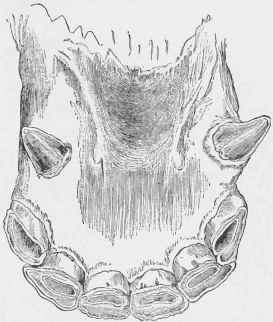
Fig. 614. - Incisors of Horse at six years.
The tusks are also rounded at their points (fig. 616).
After eight years of age some variation in the appearance of the teeth, owing to the continued attrition, may be expected; but it is not possible to decide with absolute certainty in many cases whether a horse is eight or nine years of age. At ten years old, however, the evidence is fairly definite. The so-called "marks" in all the teeth are nearly obliterated, but the circle of central enamel still remains quite distinct on the tables in all the teeth, nearer to the posterior than to the anterior edge, and at ten years old the figure of central enamel is nearly round. At this age, also, a very important mark is present. At the upper part of the top corner tooth on each side, close to the gum, a distinct depression, which is really the base of a long groove, begins to appear. This point will be alluded to further. The condition of the tables of the incisor teeth at ten years old is shown in the next drawing (fig. 617).
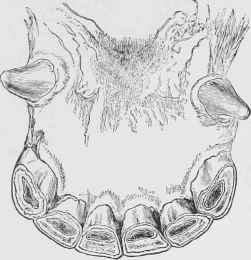
Fig. 615. - Incisors of Horse at seven years.
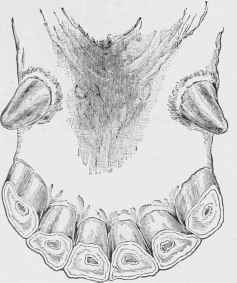
Fig. 616. - Incisors of Horse at eight years.

Fig. 617. - Incisors of Mare at ten years.
Continue to:


My Books

