


Pigeons And Doves - Order Columbae. Family Columbidae. Passenger Pigeon
Description
This section is from the book "Bird Guide: Water Birds, Game Birds And Birds Of Prey East Of The Rockies", by Chester A. Reed. Also available from Amazon: The Bird Book.
Pigeons And Doves - Order Columbae. Family Columbidae. Passenger Pigeon
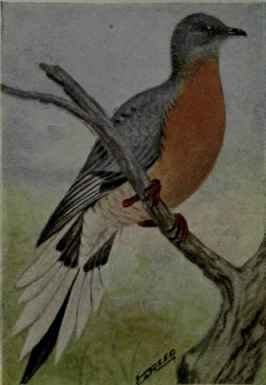
315. Eetopistes migratorius. 16 in.
Head and back bluish-slate; below, rich rusty brown. Only a few years ago, up to 1880, they were extremely abundant in eastern North America. Seemingly incredible stories are told of the immense flocks and roosting places of these birds, and most of them are authentic. It is unfortunate that the camera was not extensively used then, so we have no visual records of them. A nesting place in Michigan is described as 28 miles in length by about four in width, and every tree in the woods, throughout this whole tract, had several nests, and some were filled with them. Flocks darkening the sky and covering several square miles are recorded. And, today, but one or two stragglers are reported in a year, and these are usually doubtful. They were shot and netted at their roosting and nesting places, barreled up and sent to market for sale, this continuing so long as there were birds enough to make it profitable, and we reap the result - no birds.
Continue to:


My Books

