


Beekeepers' Societies And The Convention Period. Part 2
Description
This section is from the book "History Of American Beekeeping", by Frank Chapman Pellett. Also available from Amazon: History Of American Beekeeping.
Beekeepers' Societies And The Convention Period. Part 2
At the convention in 1905 the report of the general manager listed forty-one difficulties from eighteen states which had received attention during the past year. Several of these had to do with arrests or fines of members for keeping bees in towns, some had to do with adulteration, and some with the killing of bees from the application of poison in the spraying of fruit trees. Among the problems was the introduction of a bill in the legislature of Nevada prohibiting the keeping of bees near fields of alfalfa. Strenuous efforts have been necessary to prevent the enactment of such foolish legislation in a number of cases. Another was a similar bill in Colorado to declare sweet clover a noxious weed and require its eradication.
Perhaps the most interesting was a suit to collect damages for bees walking with dirty fee over the wash when hanging on the line, and the application for a restraining order to prevent the bees from wandering on wash day.
Injuries from bee stings were responsible for several difficulties, and the fright caused to berry pickers by the presence of bees was the cause of another.
As a result of the large number of calls for assistance from the members, a booklet entitled Beekeepers' Legal Rights was compiled by N. E. France. Several editions appeared, one as early as 1904. These were distributed very generally and served to prevent many towns from passing unfavorable ordinances, and helped many beekeepers to escape embarrassment because of their bees.
The most important litigation came when the city of Arka-delphia, Arkansas, adopted an ordinance declaring bees to be a nuisance and prohibiting keeping them within the city limits. In the case of Arkadelphia vs. Clark, the beekeepers carried the case to the state supreme court where, in 1889, a decision was made in their favor. It was decided that while bees might be a nuisance, an ordinance which declared them to be, whether they were or not in fact, was too broad and exceeded the authority of the city.
This decision has served as a protection in hundreds of other cases, in which the beekeepers have been threatened with adverse legislation on the part of cities and towns.
In 1896, Dr. A. J. Cook, who was then living in California, put forward an idea for a National Beekeepers' Exchange. The initial success of the fruit cooperatives in California apparently suggested the idea. The thought spread slowly, but was destined eventually to wreck the National society and to disintegrate it to the point where many years would be necessary to rebuild it to its former usefulness. It was not for years that the beekeepers undertook the buying of supplies for the members and the selling of their honey. When this was undertaken, as told elsewhere, the difficulties proved unsurmountable.
The completion of the merger of the two organizations, the "National Beekeepers' Union" and the "United States Beekeepers' Association, " took place in Philadelphia in 1899, after the discussion had been continued for several years. The name adopted was "National Beekeepers' Association. " In 1901 Eugene Secor, who had been the efficient general manager for several years and had successfully defended several members against charges of various kinds, asked to be relieved and turned over a balance of more than $700 to his successor, Emerson T. Abbott.
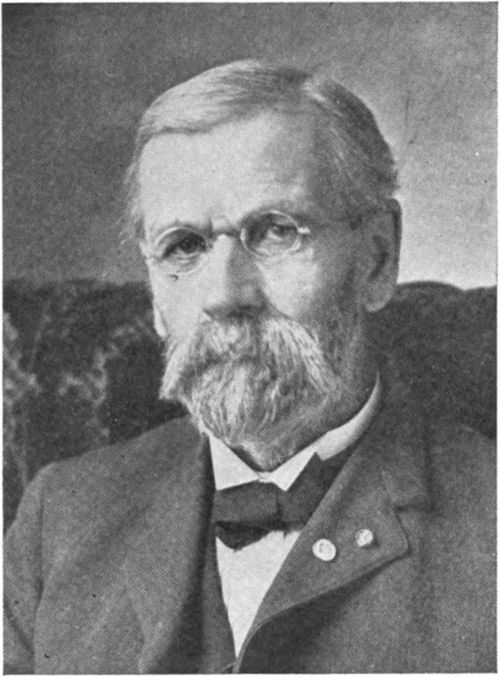
Eugene Secor was general manager of the National Beekeepers' Association in the years when it first began legal defense of its members.
In 1902, N. E. France, of Wisconsin, was elected general manager and continued in office for a period of ten years. It was during this period that the National organization reached the peak of interest, with the largest membership and the most enthusiastic conventions.
In 1904 came the St. Louis exposition and the invitation to European bee societies to send representatives to a convention at St. Louis. Few did so, but extended notices appeared in many foreign bee papers.
The agitation for a pure food law was at its height, and much discussion of adulteration and attendant publicity took place at the meetings wherever beemen came together.
By 1907 trouble from poisoning of bees by spraying orchards began to appear, and a discussion of this problem found a place on the programs.
By 1910 the idea of doing big things in the way of advertising and selling honey began to be felt. The commercial idea had become dominant. The following year, at Minneapolis, the society definitely launched on the plan of a business organization instead of an educational one, as it always had been. It was the beginning of the end of the golden age of beekeeping.
The society was reorganized along new and radically different lines. The objects as stated were: "to aid its members in the business of beekeeping; to help in the sale of their honey and beeswax, and to promote the interest of beekeepers in any other direction decided upon by the board of directors. "
A new group was in charge, and the duties hitherto discharged by the general manager were taken over by the secretary. The board of directors started out to promote the interest of beekeepers by offering them wholesale prices on their supplies in return for a trifling membership fee. Tyrrell, who had purchased the Review upon the death of Hutchinson, persuaded the board to take over its publication and issue the magazine as an official organ for the association.
The story of the magazine, and the problems which it brought, is told in the chapter relating to beekeeping publications.
The big conventions of former days were now a thing of the past, for the 1912 meeting was little more than a business meeting of the board of directors. They had visions of a cooperative of national scope. They could see hundreds of cars of honey passing through their hands, with great quantities of supplies moving out to their members. Just how this great volume of business was to be financed apparently was never considered.
Continue to:


My Books

